Share
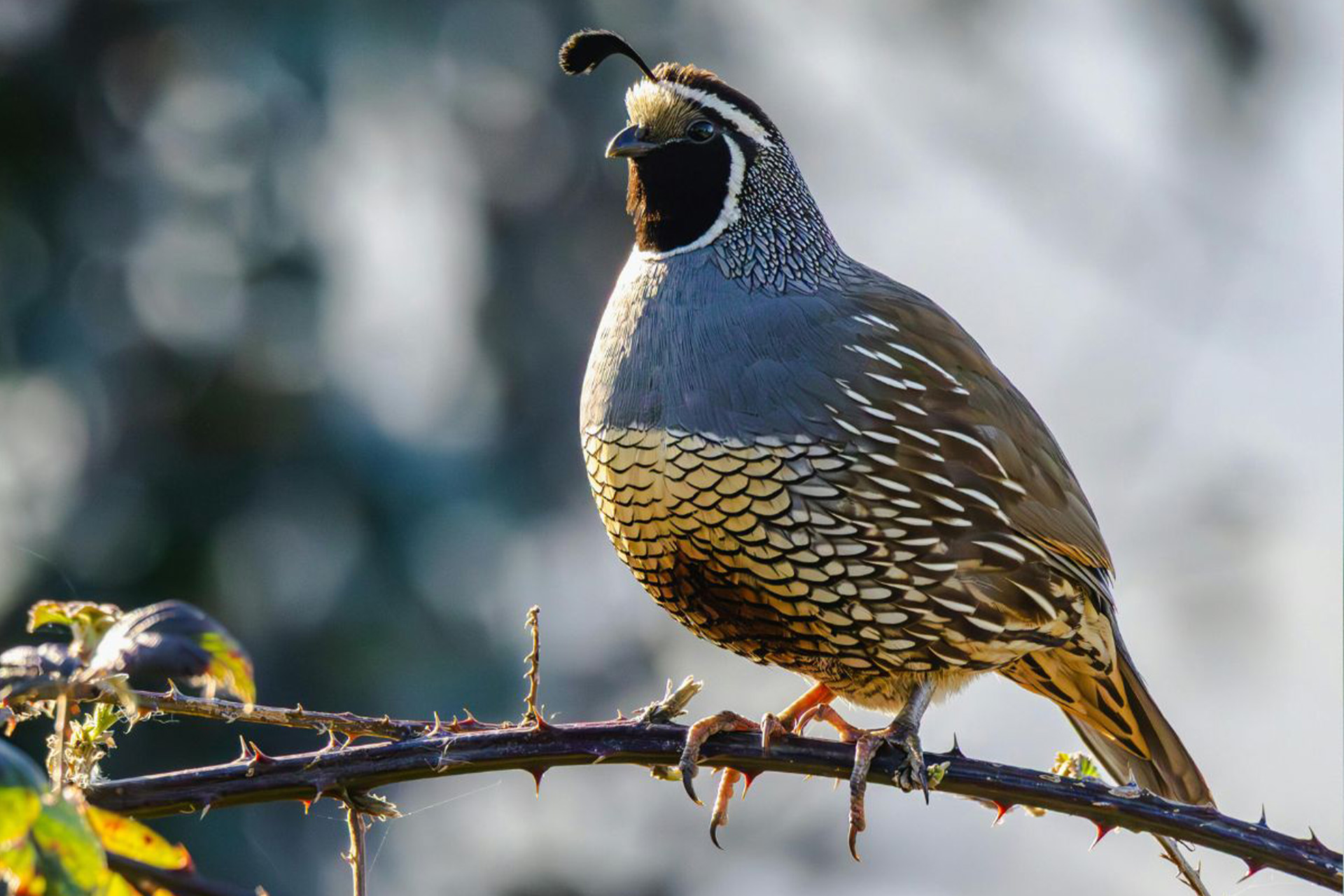
Quail of the High Desert: Native Birds and How to Attract Them to Your Yard
Across high desert landscapes, quail are among the most recognizable and beloved birds. Their quick movements, soft calls, and distinctive topknots make them a familiar sight along sagebrush flats, desert washes, and suburban edges. In places like Nevada and other high desert regions, quail have adapted remarkably well to the dry climate and sparse vegetation, thriving in both wild spaces and neighborhoods that provide the right food and cover.
Native Birds of the Desert
Several species of quail inhabit high desert environments, but the most commonly encountered is the California quail. Despite its name, this species ranges widely across the western United States and has long been established in desert valleys, foothills, and brushy landscapes.
Quail are considered native birds in much of the high desert, where they evolved alongside native shrubs, grasses, and seasonal water sources. Their survival strategies are well suited for arid environments. Rather than migrating long distances, quail typically remain within the same territory year-round, moving locally in search of food, water, and shelter.
They prefer habitats with dense ground cover, sagebrush, rabbitbrush, bitterbrush, and other shrubs, where they can hide from predators and build their nests. These birds are highly social and are usually seen in groups called coveys, which may contain a dozen or more individuals.
Mating and Nesting Habits
Quail breeding season usually begins in early spring as temperatures warm and food becomes more abundant. During this time, coveys begin to break apart into smaller family groups as pairs form.
Male quail become more vocal and territorial, often calling from elevated perches such as rocks, fence posts, or low branches. Their calls help attract mates and warn other males to keep their distance.
Once a pair forms, the female selects a nesting site on the ground, typically hidden beneath shrubs or tall grass. The nest itself is simple, a shallow depression in the soil lined with grass, feathers, and other plant material.
A typical clutch contains anywhere from 10 to 16 eggs. The female incubates the eggs for about three weeks while the male remains nearby to guard the area. After hatching, the chicks are remarkably independent. Within hours they are able to leave the nest and follow their parents in search of food.
Young quail grow quickly, feeding on insects during their earliest days for the protein needed for rapid development. As they mature, their diet shifts more toward seeds, grains, and plant material.

Daily Life in the High Desert
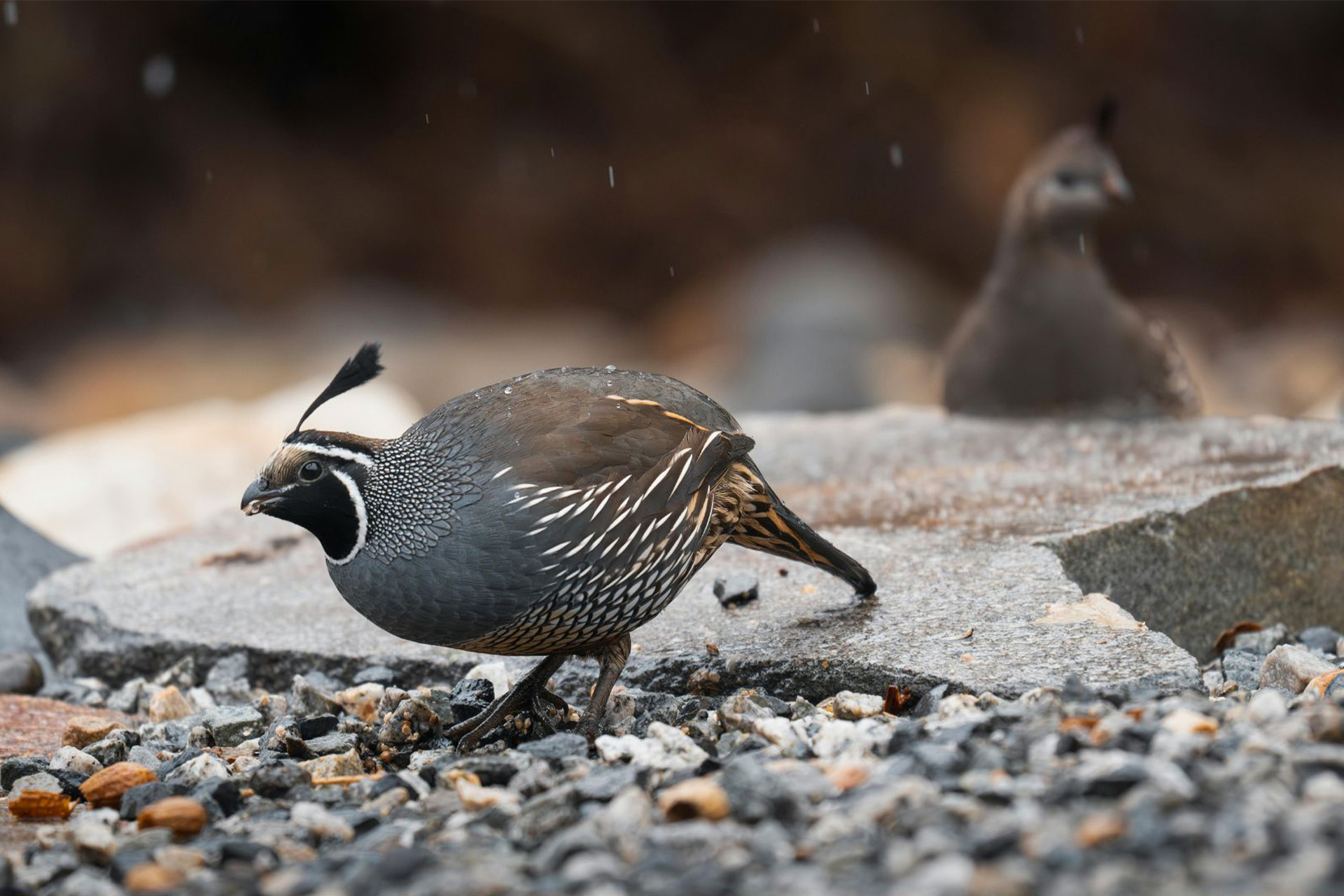
Quail are ground-dwelling birds that spend most of their time walking and scratching through soil and leaf litter to find food. While they can fly, they usually prefer to run quickly through brush when threatened. When they do take flight, it is often in a sudden burst of rapid wingbeats that startles predators.
Their diet consists primarily of seeds, grains, small fruits, and insects. In the high desert, they rely heavily on naturally available seeds from grasses and shrubs. During dry periods, food can become scarce, which is why supplemental feeding can be especially beneficial.
Quail also rely heavily on cover for protection. Dense shrubs, wood piles, and thick vegetation provide critical hiding spots from predators such as hawks, coyotes, and domestic cats.
Attracting Quail to Your Yard
Many high desert homeowners enjoy attracting quail to their yards, both for wildlife viewing and to help support local bird populations. The key to attracting quail is providing three essentials: food, cover, and water.
One of the most effective ways to provide food is by offering specially formulated quail feed blocks. Our Quail Blocks are designed for long-lasting feeding and specifically formulated to attract quail.
The block contains a mix of nutritious seeds and grains including cracked corn, white milo, black sunflower, and oats. It is also fortified with calcium, an important mineral that supports strong bones and helps hens produce healthy eggshells during the breeding season.
Unlike loose seed that can disappear quickly or attract unwanted pests, the block format provides a slower, more natural feeding experience. The seeds are held together using gelatin, which means birds must pick them off gradually. This encourages longer feeding times and allows more birds to benefit from the food source.
Placing a quail block near natural cover, such as shrubs, brush piles, or low trees will make birds feel safer while feeding. Ground-level placement works best, since quail naturally forage on the ground rather than at elevated feeders.
Living Alongside Desert Wildlife
Watching a covey of quail move through the yard can be one of the simple pleasures of living in the high desert. Their family-oriented behavior, quick movements, and distinctive calls bring life to the landscape throughout the year.
By understanding their natural habits and providing supplemental food sources like quail blocks, we can help support these native birds while enjoying the unique charm they bring to desert environments.
Share
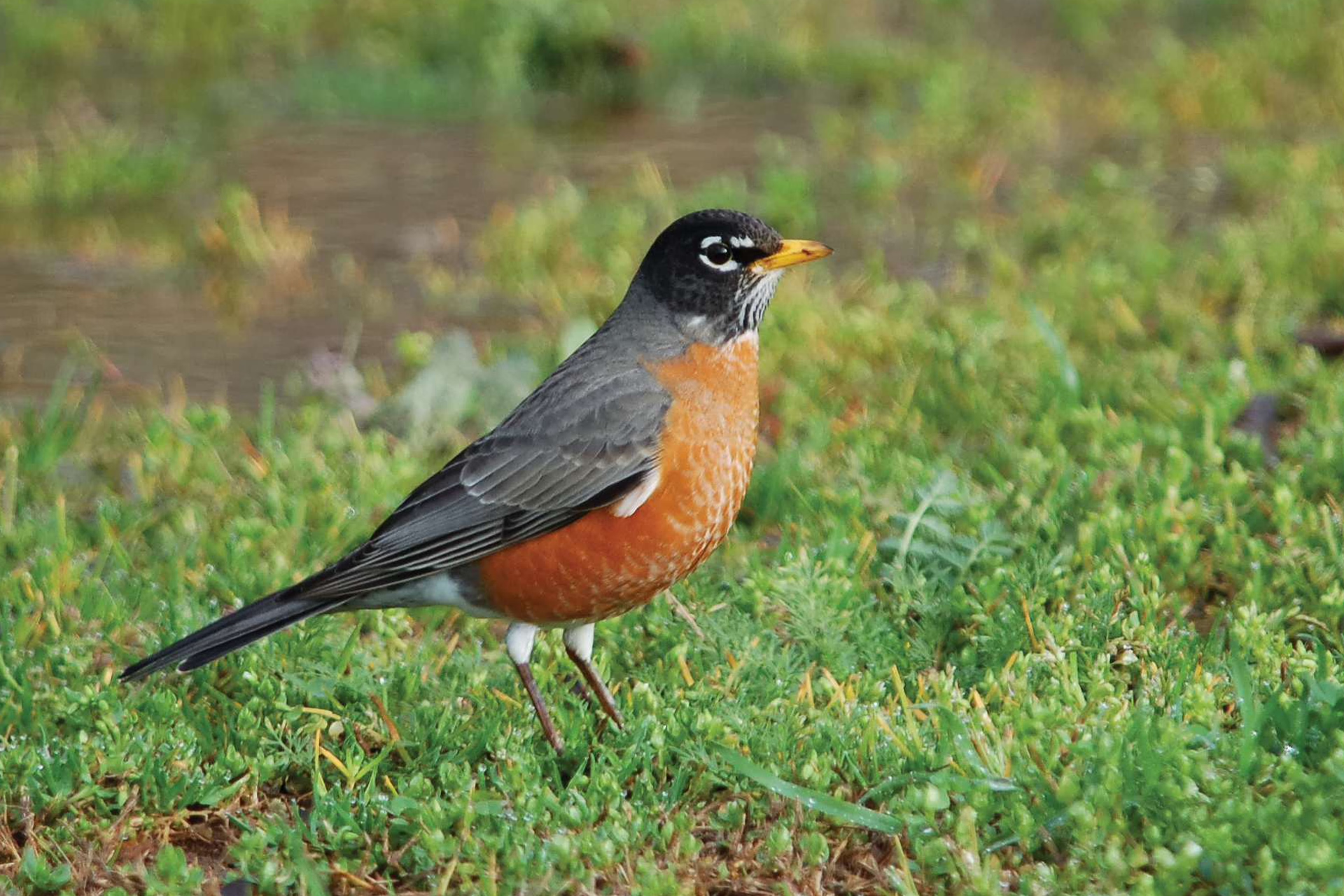
The American Robin is one of the most recognizable and beloved birds in Northern Nevada. With its warm reddish-orange breast, charcoal-gray back, bright white eye ring, and cheerful personality, the robin is often considered a symbol of spring.
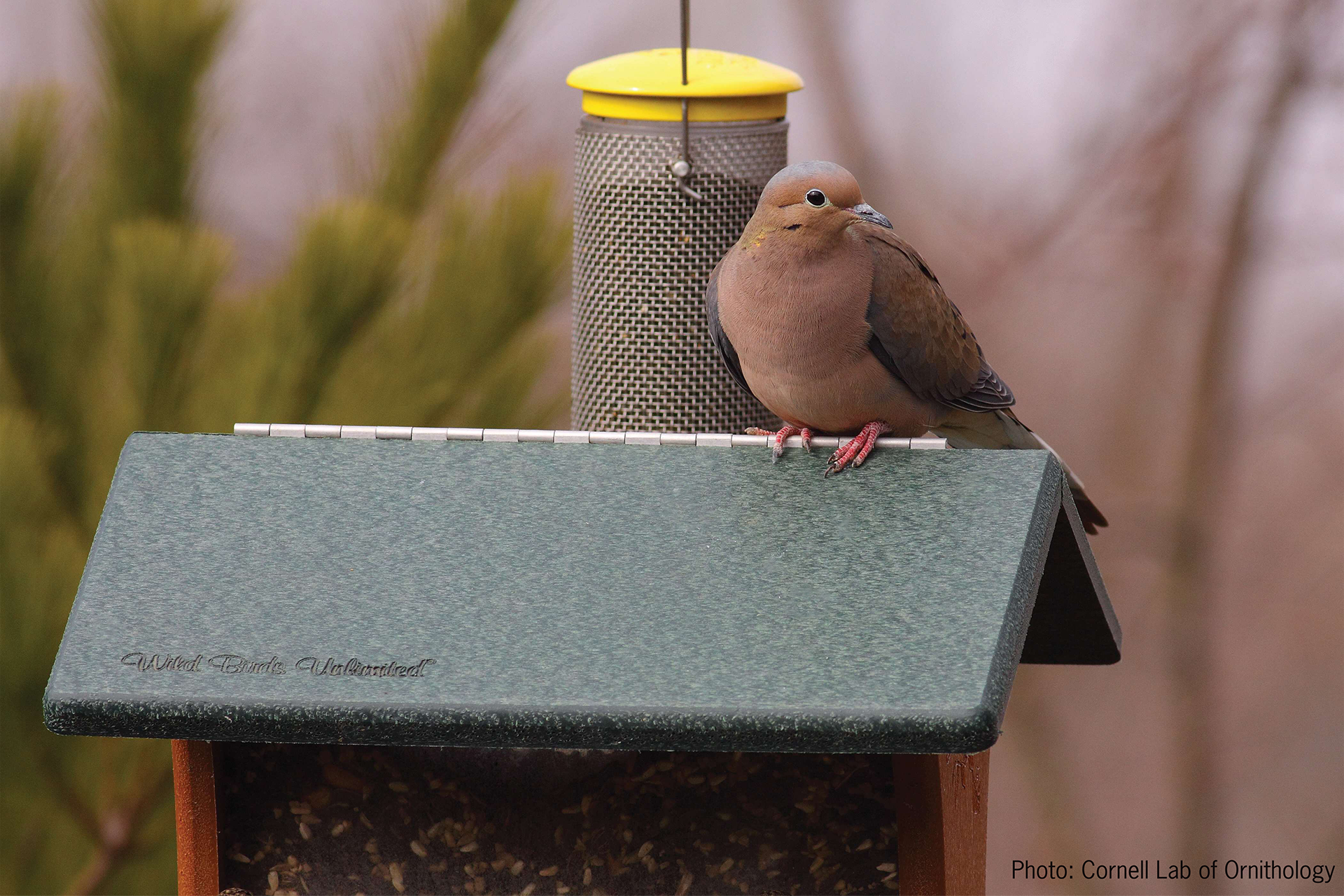
Across Northern Nevada’s open valleys, ranchlands, suburban neighborhoods, and high desert landscapes, the soft cooing of the mourning dove is one of the region’s most familiar bird songs.
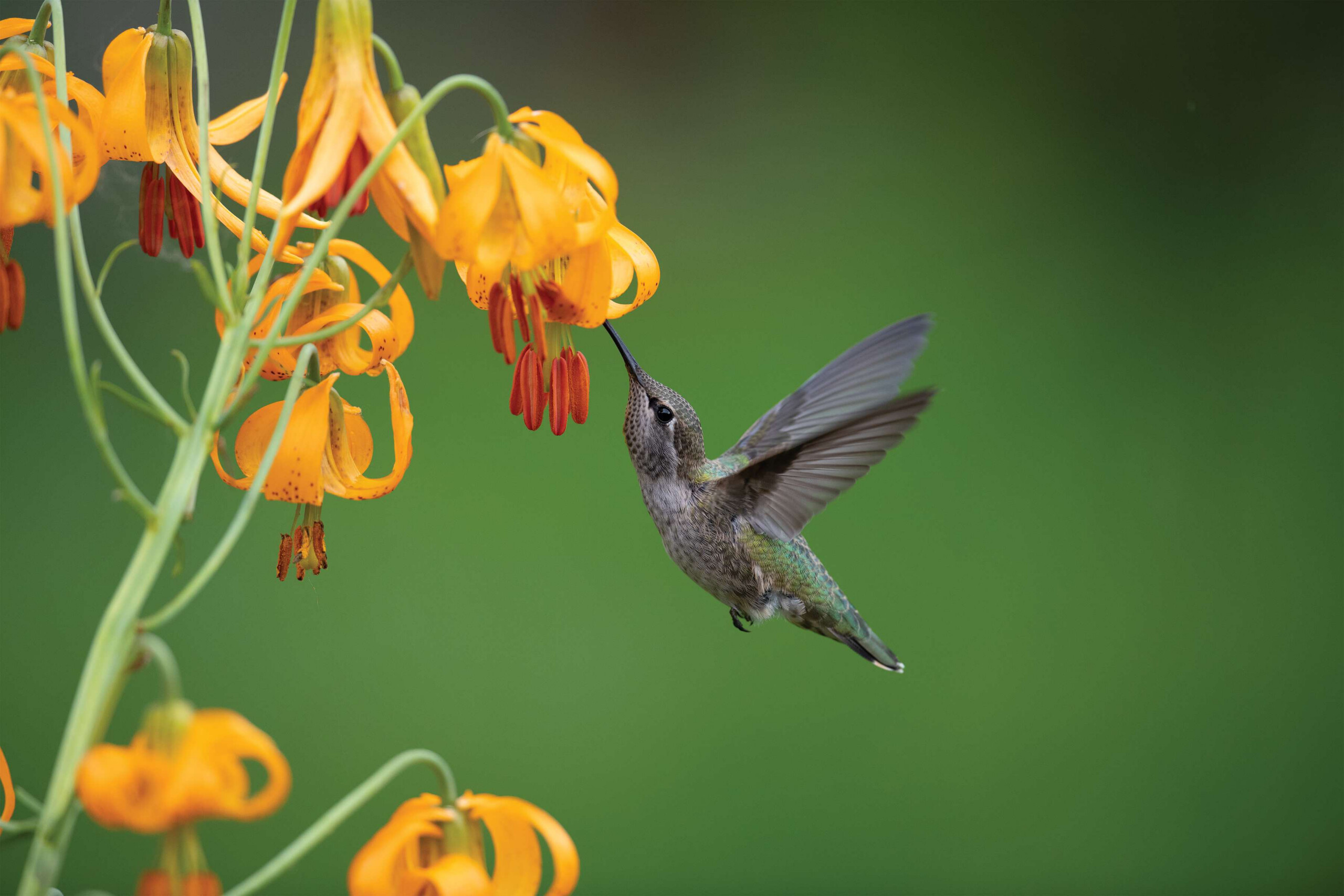
Among the many birds that inhabit Northern Nevada, few capture attention quite like the Anna’s hummingbird. Tiny, fast, and brilliantly colored, these remarkable birds have become increasingly common throughout the Reno–Sparks area and surrounding high desert communities.
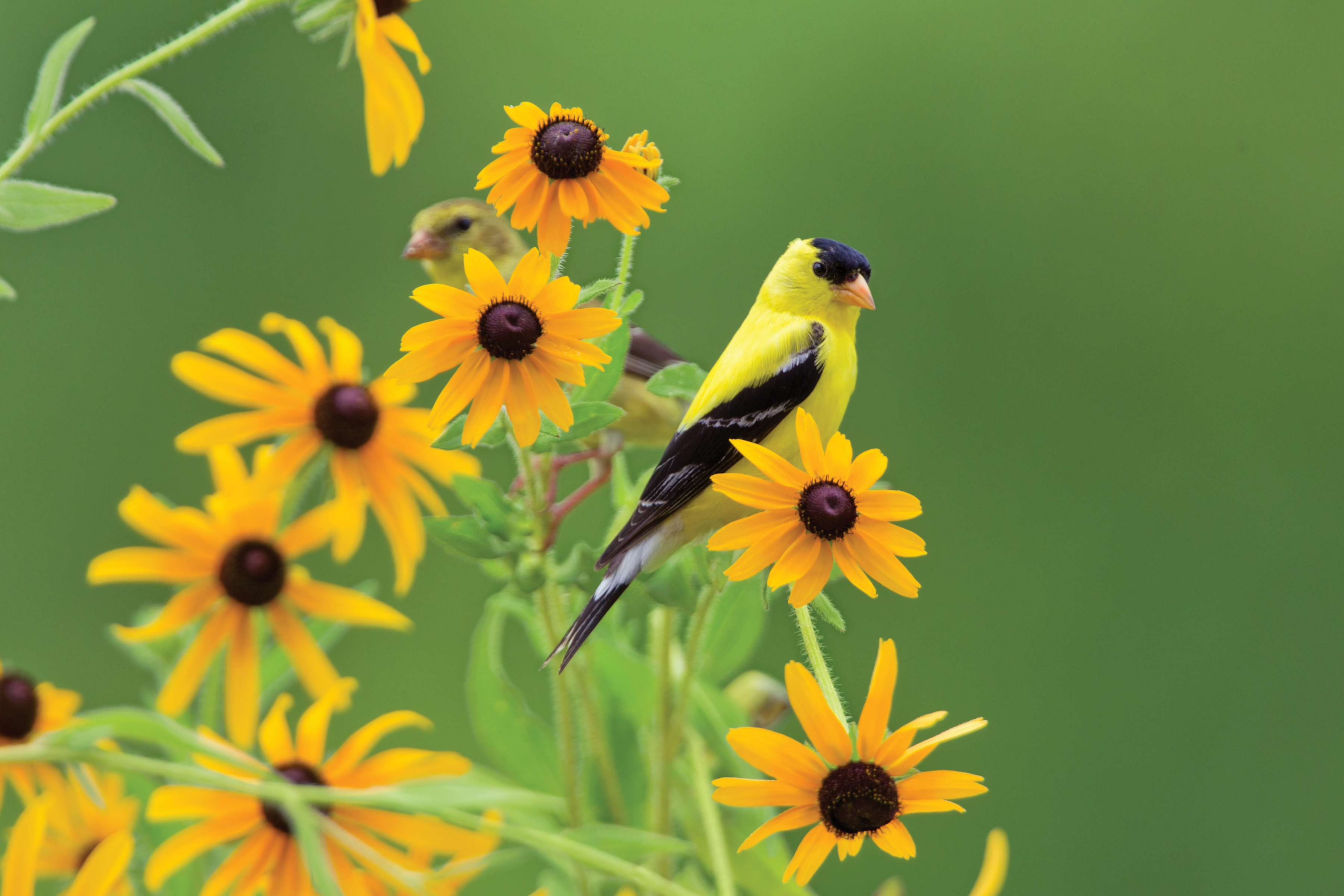
The American Goldfinch is one of the most cheerful and recognizable birds found in Northern Nevada. Its bright yellow summer plumage stands in striking contrast to the muted browns and grays of the high desert.