
Share
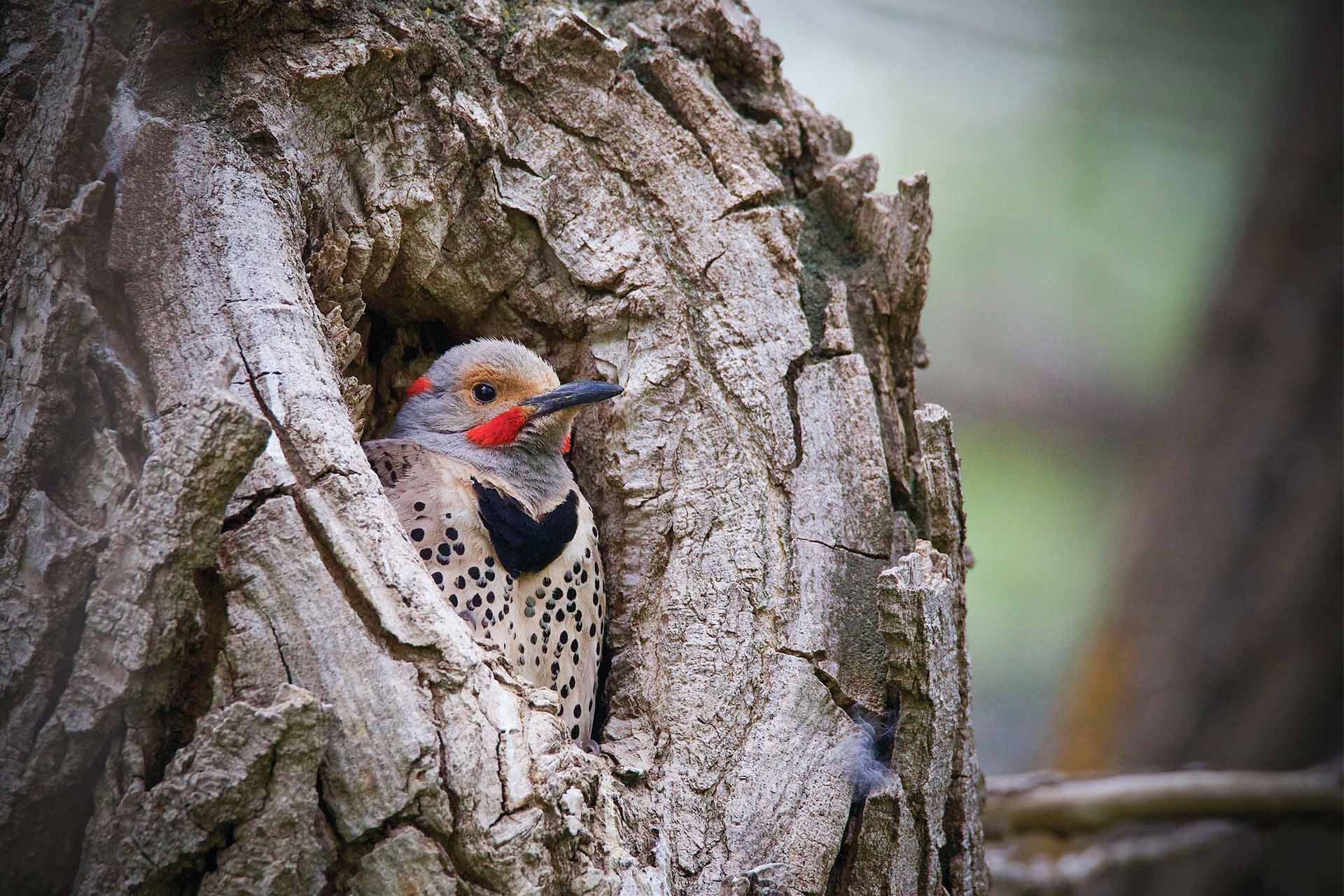
A northern flicker searching the ground beneath a tree can be a welcome visitor to a Reno garden. The same bird excavating your siding is harder to appreciate. Understanding what woodpeckers need helps you create places to enjoy them while protecting your home.
Here in the high desert, the birds you see depend on the trees around you. Mature neighborhood landscapes, the Truckee River corridor, and nearby pine-covered foothills support different woodpeckers. Food and suitable nesting wood matter more than a feeder alone.
Getting to Know Our Local Woodpeckers
Northern Flickers are a familiar starting point. These large, brownish woodpeckers have spotted bellies, a black chest bib, and a white rump that shows as they fly. Our western birds usually flash reddish-orange beneath the wings and tail. Males have a red cheek stripe. Watch for flickers probing open ground for ants and beetles, including beneath trees and along garden edges.

Downy and Hairy Woodpeckers share a black-and-white pattern and a white stripe down the back. Adult males have a small red patch on the back of the head. The smaller Downy has a short, dainty bill; the Hairy’s sturdy bill is nearly as long as its head. Both occur locally and may visit feeders where trees provide nearby cover.

White-headed Woodpeckers are especially associated with the pine forests along the Sierra foothills. Their mostly black bodies and bright white heads make them distinctive. They eat pine seeds as well as insects, so a property near mature pines offers a better setting for them than an open yard with few trees.
Red-breasted and Williamson’s Sapsuckers also occur in nearby wooded habitats. Sapsuckers make shallow sap wells in living trees, returning to drink sap and take insects. Local birding guides also record occasional Lewis’s and Black-backed Woodpeckers at Davis Creek. These are birds to watch for on outings, rather than species every Reno homeowner should expect at a feeder.
Understanding Nesting and Drumming
Woodpeckers nest in cavities, often excavating dead trees or softened portions of living trees. The chamber protects eggs and young, with wood chips serving as the nest floor. An old cavity may later shelter other birds that cannot excavate their own homes.
Northern Flickers sometimes reuse existing cavities. Both parents help excavate and care for the brood. A typical clutch contains five to eight eggs, which hatch after roughly 11 to 13 days. Young remain inside for about another four weeks, so adults making repeated visits to one opening may be feeding a family.
Not every burst of pecking means a nest is underway. Rapid, rhythmic drumming advertises territory and helps attract a mate, especially during the breeding season. A gutter or metal vent makes an effective sounding board. Irregular probing may mean a bird is searching for insects, while a growing, deep opening may be a nest or nighttime roost.
Creating a Place You Want Them to Visit
Choose a viewing area with trees nearby and space to mount a feeder away from the house. A garden pole near suitable cover can help concentrate feeding activity where you can enjoy it. Avoid attaching food to siding, porch posts, or the wall you are trying to protect.
Keep mature trees healthy and add locally suitable trees and shrubs as space and irrigation allow. A diverse garden supports the insects woodpeckers eat. Avoid routine broad-spectrum insecticide use, particularly on ground where flickers forage. Let the birds find some of their own meals.
A standing dead tree can provide food and nesting opportunities, but retain one only where an arborist considers it safe and it fits local wildfire guidance. A snag beside the house is not a suitable trade for damaged siding. A shallow birdbath with fresh water can round out the habitat; rinse and refill it frequently in our dry weather.
Choosing Foods and Feeders at Moana Nursery
Suet is a useful starting point for attracting woodpeckers. Ask our Wild Birds Unlimited team at Moana Nursery about an easy-to-clean suet feeder with a tail prop. The extended support lets a woodpecker brace its tail while feeding, much as it would against a tree trunk.
The No Melt PB&J Suet Cake is a practical choice for warmer weather. Its peanut-rich suet dough appeals to woodpeckers. Place it in shade and offer only what birds use promptly. A no-melt formula still needs regular checking, and any spoiled food should be removed.
Bark Butter With Calcium Suet Cake offers another option. Made with suet, peanut butter, and corn, it fits a standard suet cake feeder. Its added calcium can supplement the food offered during breeding season, while the garden continues to supply natural forage.
The Woodpecker Birdseed Cylinder Small combines tree nuts, black oil sunflower, and Bark Butter Bits. Use it on a compatible seed cylinder feeder for a different way to offer nuts and seed. Ask our birding team to match the food and feeder to the birds visiting your yard, and check current product availability before making a trip.
Give birds time to discover a new station. Keep feeders clean and food dry, and remove old food and debris. Feeding can encourage visits to a preferred spot, but it does not reliably stop a bird from drumming or excavating elsewhere. More food can also attract more woodpeckers.
Offering a Suitable Nest Box
Northern Flickers occasionally accept nest boxes, although many woodpeckers prefer to excavate trees. Choose a box designed specifically for flickers, following a tested plan such as Cornell’s NestWatch design. A small decorative birdhouse will not provide the right space.
NestWatch recommends mounting a flicker box 6 to 12 feet above ground in a shady location with an open flight path and packing it to the top with white pine wood chips so the birds can excavate. Use the full plan for construction and placement, including protection from afternoon heat. Locate the box in the habitat you want birds to use and monitor it responsibly. Occupancy is never guaranteed, and a box is not a substitute for protecting vulnerable siding.
Keeping Woodpeckers Off Your House
Respond when you first notice activity, before the site becomes a habit. Observe from a distance to see whether the bird is drumming, feeding, or enlarging a cavity. Check repeatedly used siding for insects, moisture damage, and deteriorating wood. Woodpecker activity can reveal a maintenance issue, but it does not automatically mean your home has an infestation.
Before sealing any opening or installing a barrier, make sure no bird is inside and no active nest is present. Woodpeckers are protected under federal and Nevada law. If you suspect eggs or young, leave the opening accessible and contact the Nevada Department of Wildlife for guidance. Do not trap birds, relocate a nest, or block an occupied cavity.
For small, unoccupied damage sites, repair the wood and consider a smooth metal cover over the vulnerable area. Larger trouble spots may need professionally installed bird exclusion netting. Keep netting taut, at least three inches away from siding, and closed around the edges so birds cannot get behind it. Inspect it regularly for loose sections or trapped wildlife, and keep building vents functional.
Reflective streamers moving near the problem spot may help when activity first begins, but their results vary. Plastic owls and sound devices often lose their effect as birds become accustomed to them. Avoid sticky bird repellents, which can injure or trap birds. A properly installed physical barrier offers a more dependable approach to recurring damage.
Making Room for Woodpeckers
A feeder in a thoughtful location gives you a chance to watch these birds closely. Healthy trees and safe nesting habitat help support them beyond the feeding station. Combine those garden choices with prompt repairs and protection for vulnerable parts of the house.
If you are unsure which woodpecker is visiting, bring a description or a photo of the bird and the damage to Moana Nursery. Our Wild Birds Unlimited team can help you choose food and feeders for the birds you want to welcome into your high desert garden.
Share
The American Robin is one of the most recognizable and beloved birds in Northern Nevada. With its warm reddish-orange breast, charcoal-gray back, bright white eye ring, and cheerful personality, the robin is often considered a symbol of spring.
Across Northern Nevada’s open valleys, ranchlands, suburban neighborhoods, and high desert landscapes, the soft cooing of the mourning dove is one of the region’s most familiar bird songs.

Among the many birds that inhabit Northern Nevada, few capture attention quite like the Anna’s hummingbird. Tiny, fast, and brilliantly colored, these remarkable birds have become increasingly common throughout the Reno–Sparks area and surrounding high desert communities.
The American Goldfinch is one of the most cheerful and recognizable birds found in Northern Nevada. Its bright yellow summer plumage stands in striking contrast to the muted browns and grays of the high desert.