

Share
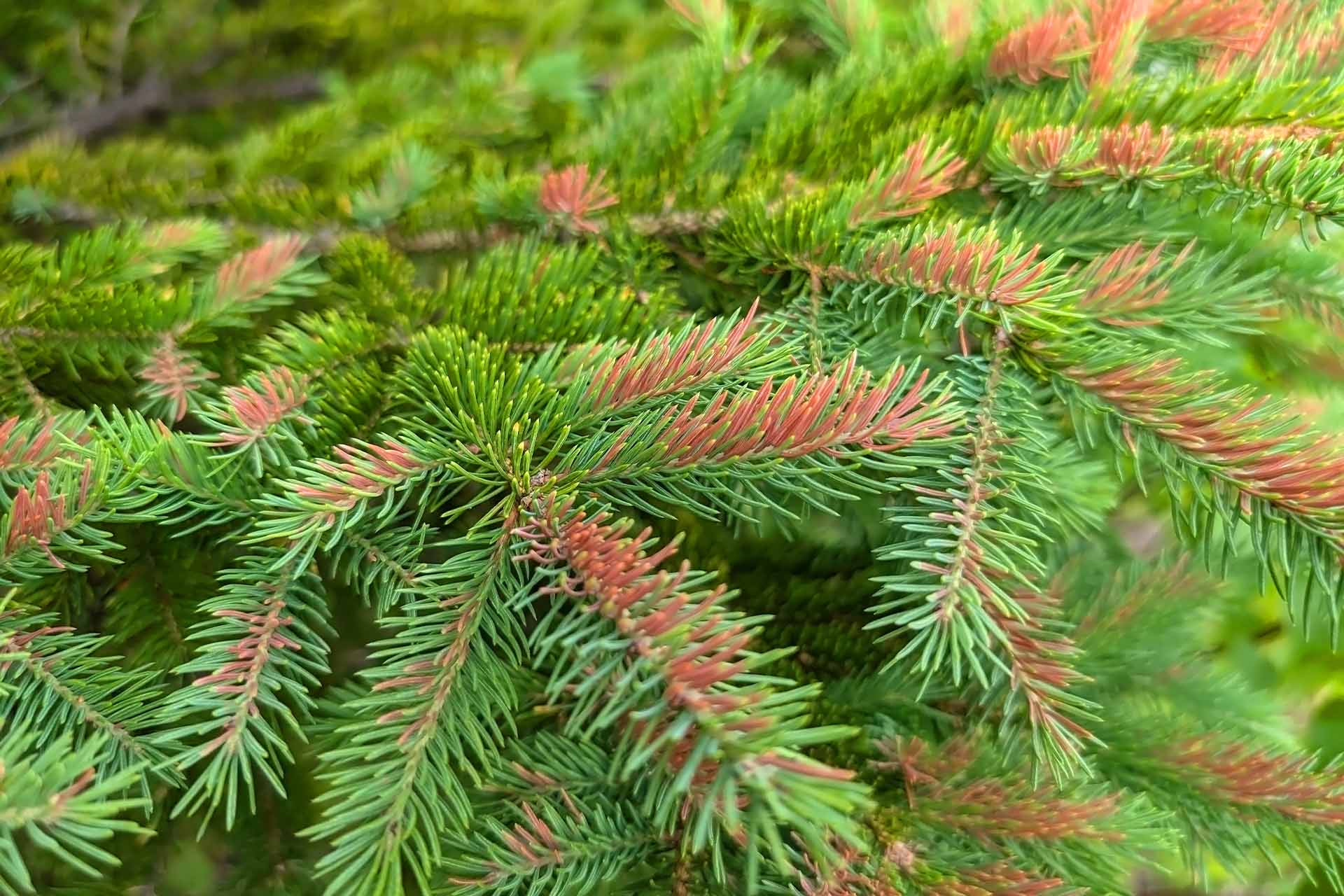
It’s normal for deciduous trees to lose their leaves in fall so it’s normal for evergreens to lose their needles and leaves, right? Yes and no. Here are the details of a healthy shed versus unhealthy damage, aka Desiccation, which can have devastating effects on your plants but is also easy to prevent.

What is desiccation?
Desiccation occurs when a plant is unable to take up water as quickly as it loses it: this commonly occurs in winter because the frozen ground makes it harder for plants to get access to water. The winter sun and dry winter winds, especially in Northern Nevada, can also contribute to that water loss.
Conifers and non-conifer evergreens like photinia, holly, laurel, and boxwoods do not go into a full dormancy during winter. This is why they retain most of their leaves/needles, where they get the name “evergreens” from as they stay green, and, most importantly, do still require water.
Desiccation is, put very simply, the plant drying out. It appears as the outermost leaves turn brown first, and moves inward, or from the top down.
This is the opposite of how needles and leaves typically drop during the change of seasons. In normal seasonal drop, they turn brown and fall off starting closest to the trunk and moving outwards, or from the bottom and moving upwards.
What can you do about it?
First, water your conifers and non-conifer evergreens throughout winter as the weather allows. On sunny days with mild weather, run a hose and slowly deep soak your plants. Remember to unhook and drain the hose afterwards so it doesn’t freeze!
Second, we recommend Wilt Pruf. This is a professional grade anti-desiccant spray. It acts as a protective film and seals in moisture to reduce water loss during winter.
Next, we recommend adding a 2 inch thick layer of organic mulch: this provides insulation, helps the soil underneath retain moisture, and reduces how far into the soil the cold can reach. Products like G&B Organic’s Soil Building Conditioner or GreenAll’s MicroBark are perfect for this.
Another option is to create a physical barrier by wrapping posts in a material like burlap: this is especially helpful in preventing desiccation in young trees and shrubs without extensive root systems. There are a variety of ways to wrap them or set up a wind barrier, but make sure you secure it thoroughly as the high winds in Northern Nevada might rip unsecured posts out of the ground.
What shouldn’t you do?
Don’t immediately prune off branches that are turning brown. Scratch the bark, gently, with your fingernail. If there’s green tissue underneath the bark, it’s still viable and might recover next season.
It’s also best to avoid things that can encourage new growth, like fertilizing and pruning, towards the end of fall. The new growth is typically more vulnerable to desiccation as well as frost damage.
Desiccation sounds scary, but acting preemptively will reduce the risk almost completely. Also keep an eye on your trees over winter: if you catch it early and take measures, they’ll likely recover and continue to provide greenery in your garden year round.
Share

Moana Nursery is excited to introduce a new solution that’s easy, eco-friendly, and community-minded: Poinsettia Recycling!

Hoyas offer lasting interest. Their climbing or trailing stems carry leaves in a range of shapes, patterns, and colors. For indoor gardeners in the high desert of northern Nevada, the main considerations for Hoyas are strong window light, dry air, and a potting mix that supports healthy roots. Paying attention to those conditions helps a new hoya settle into your home. Happy Hoya-days!
Dwarf mugo pine, known botanically as Pinus mugo var. pumilio, offers a presence that brings texture, provides contrast, and lasts over winter. With dense green needles, sturdy branches, and a naturally low, spreading form, it brings the character of a mountain pine into the home landscape.
High desert gardeners ask a lot of their plants. A successful shrub must tolerate intense sunlight, dry air, temperature swings, alkaline soil and winter cold, while still bringing color and life to the landscape. Caryopteris meets that challenge beautifully.