
Share
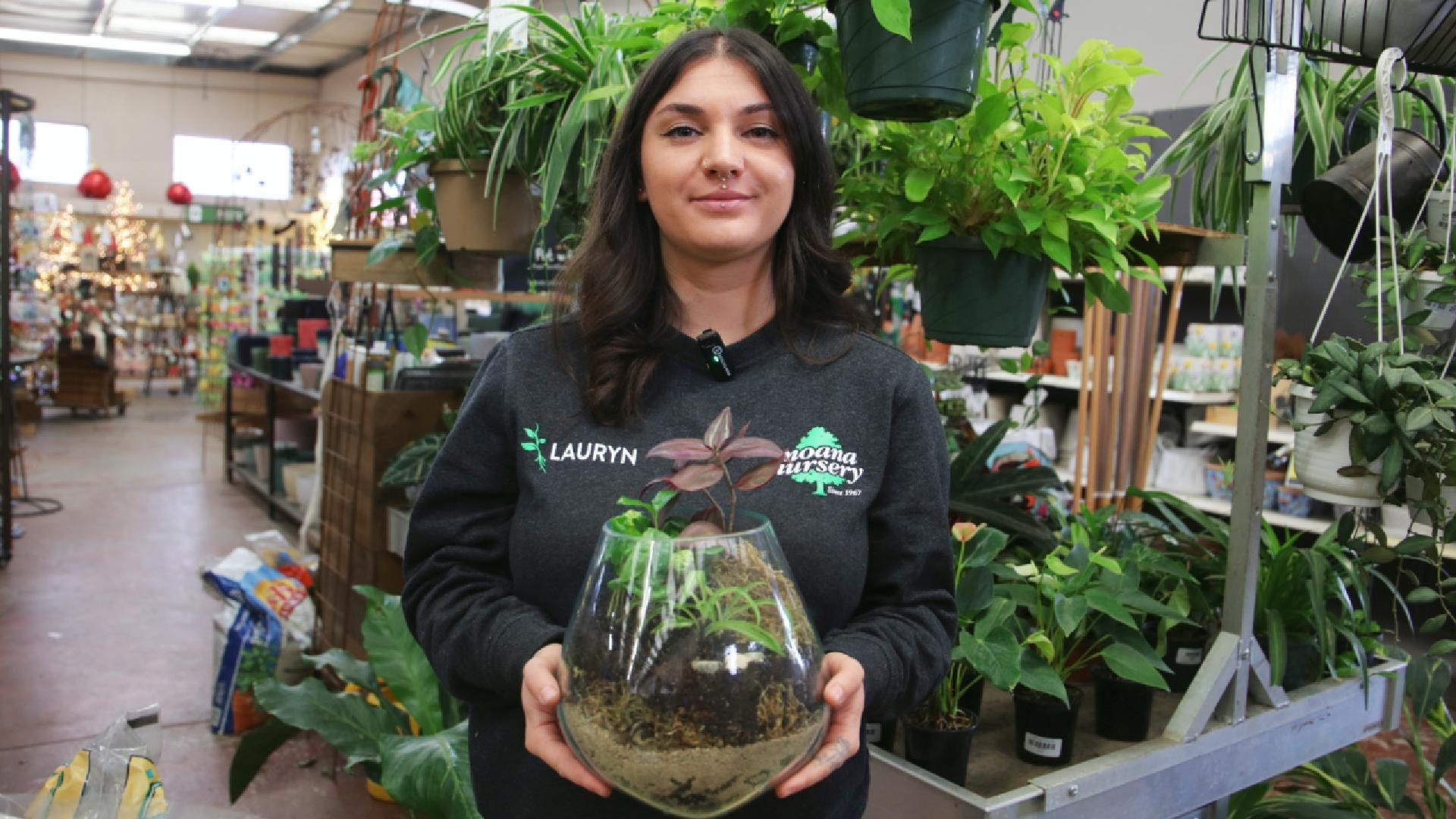
Terrariums are a unique way of displaying your houseplants, almost like having a little world contained within a glass vase or jar wherever you choose to display it. Some terrariums are self-contained and sealed, which are more complicated to build, but today we’ll teach you how to make an open top terrarium. Not only do they offer visual interest and variety in a small space but they’re entirely customizable and fairly easy to build!
The Base
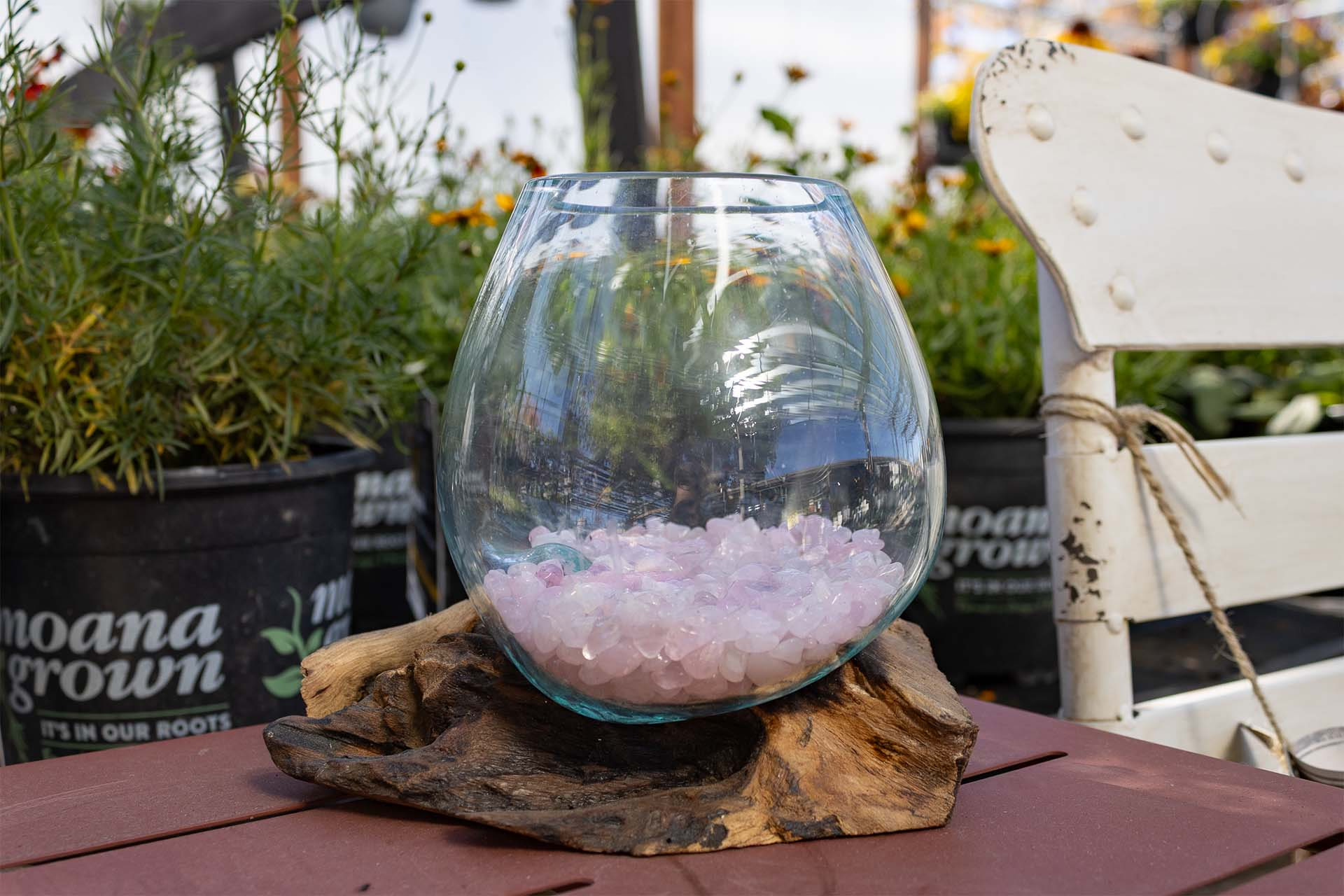
Start by adding a layer of pea gravel. Aim for a thin layer that obscures the bottom of your container from view. Doing this will ensure that water does not sit in the soil where your plants are, which can cause issues like root rot. It essentially acts as a draining hole in a vase.
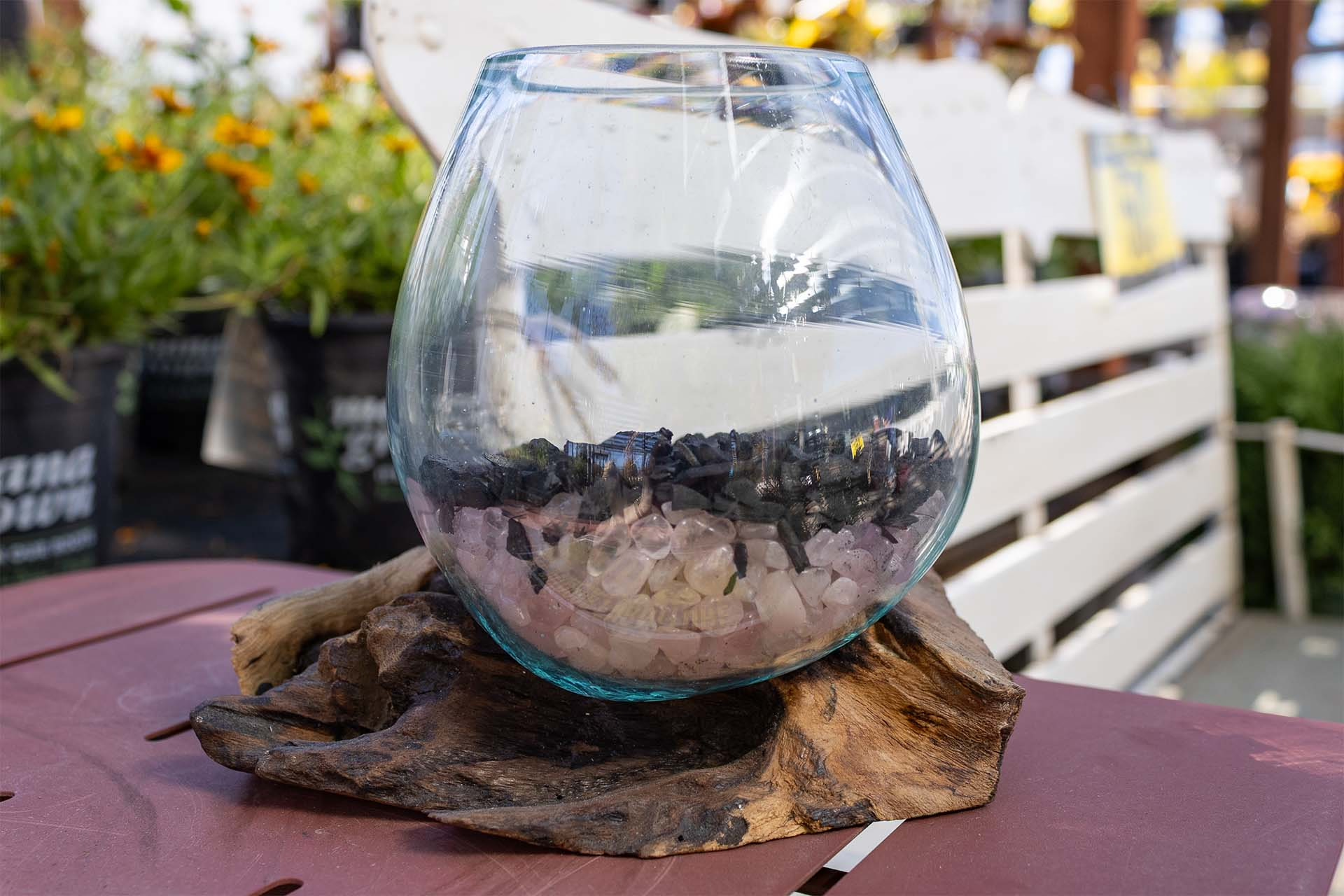
Next, add a layer of charcoal. It should completely cover the pea gravel. Adding a layer of charcoal helps the terrarium retain its nutrients and reduces the impact of over-watering. You can optionally add a thin layer of mesh or landscape fabric in between the gravel and charcoal to prevent finer materials like the sand or soil from falling into the basin.
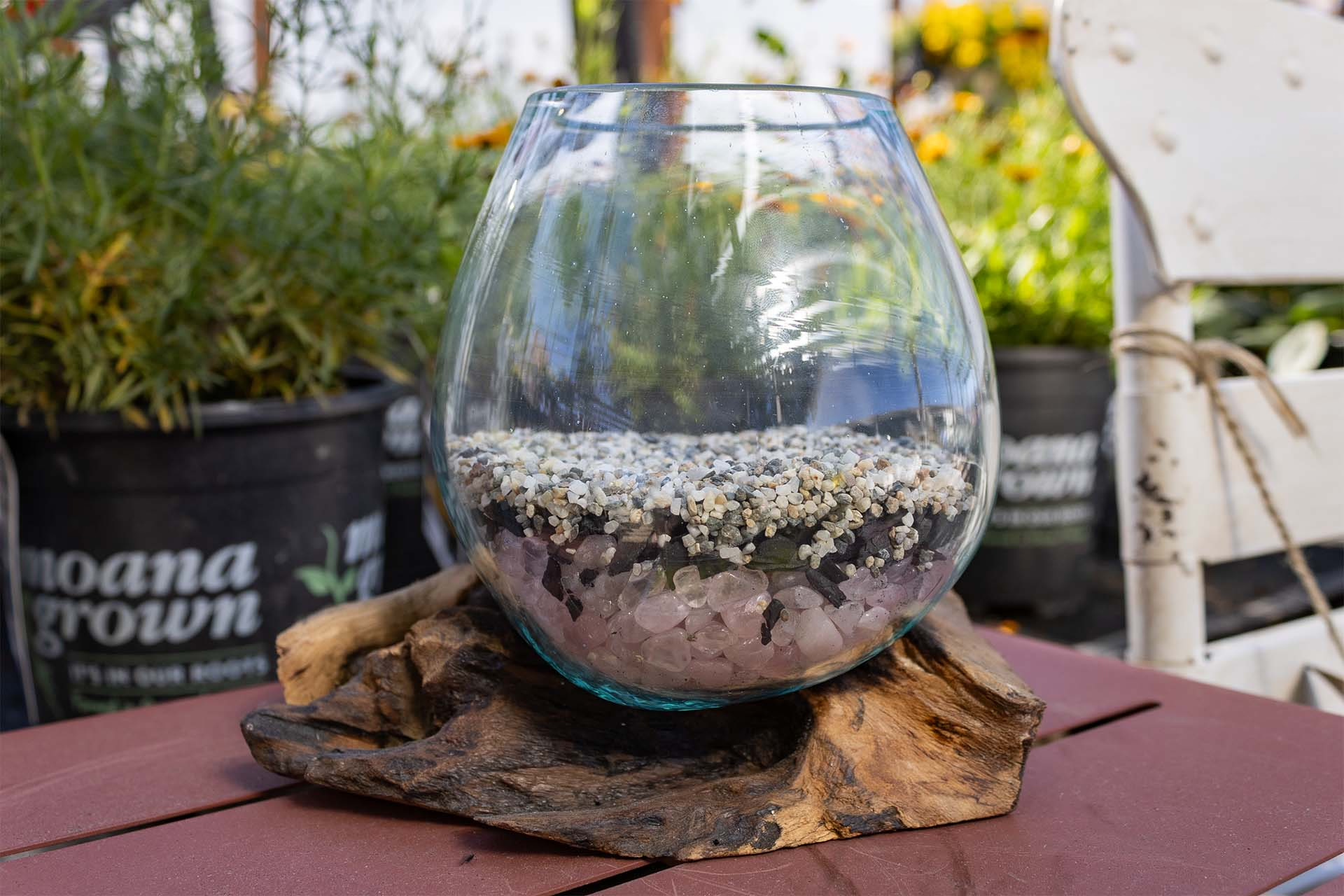
Add a layer of sand. This layer should be thick, completely obscuring the charcoal. The sand will help the top layer of soil to retain moisture so it does not all immediately drain into the basin at the bottom. Making this layer thicker also helps keep everything in place below as it fills in the gaps between the chunkier charcoal and pea gravel, especially if you are not using a mesh layer in between the gravel and charcoal.
Note: For this example photo, the sand layer was kept fairly thin to account for the small vase.
Above the sand, you can add a thin layer of moss. This step is optional, but adds more depth and texture to the layers in the bowl. When adding it, it might seem fluffy or too high but the soil will compress it. This moss layer will also help shape the landscape for the top of the terrarium so play with the positioning and don’t worry about making it a perfectly even spread.
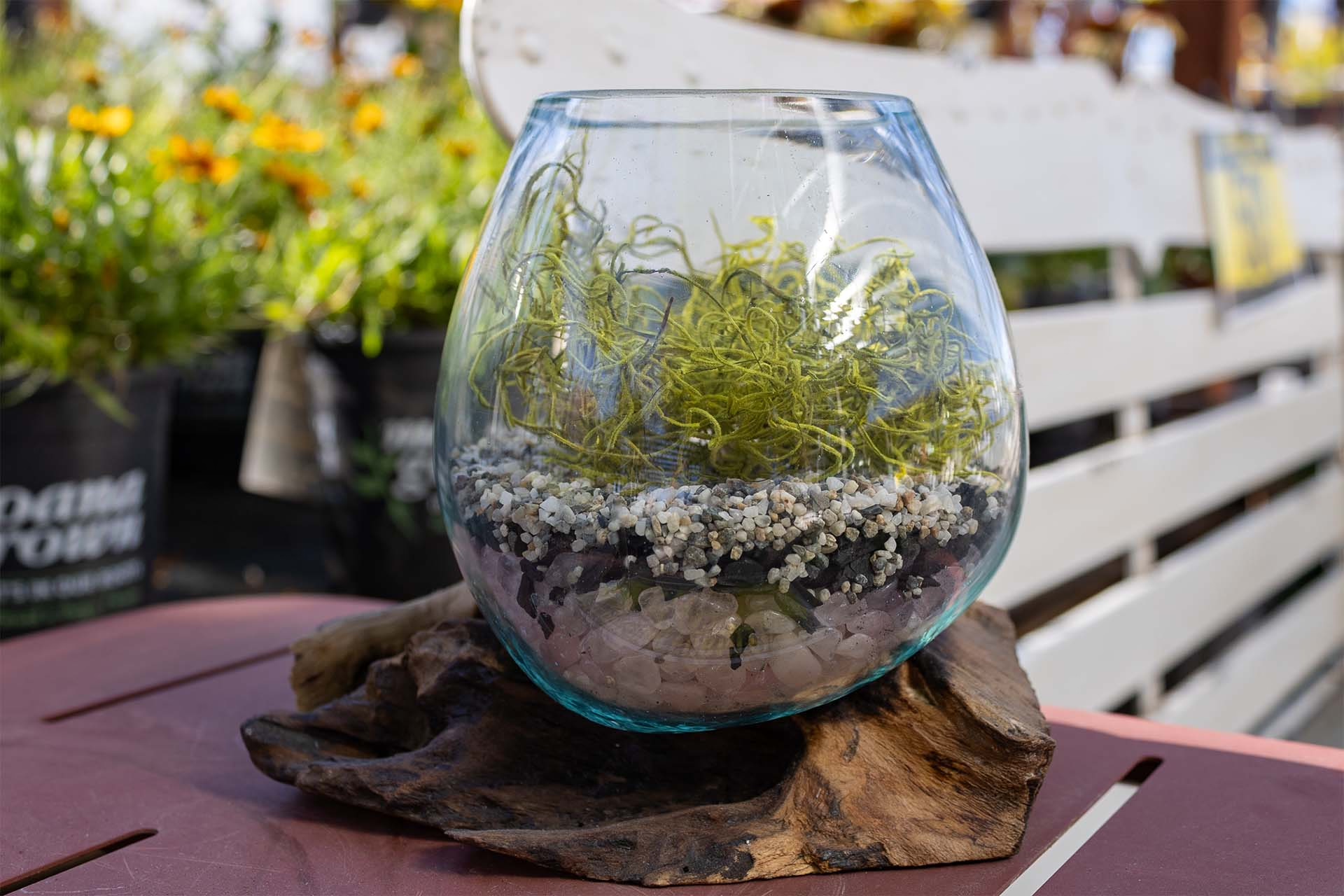
You can even vary these layers! Add other elements, like different varieties of moss or lava rock instead of pea gravel, to add more visual layers to the base. There are a variety of options for this! Just keep in mind the health of your plants and the functions of each layer: lots of layers that retrain moisture might affect how happy something like a succulent will be in your terrarium.
Choosing Plants
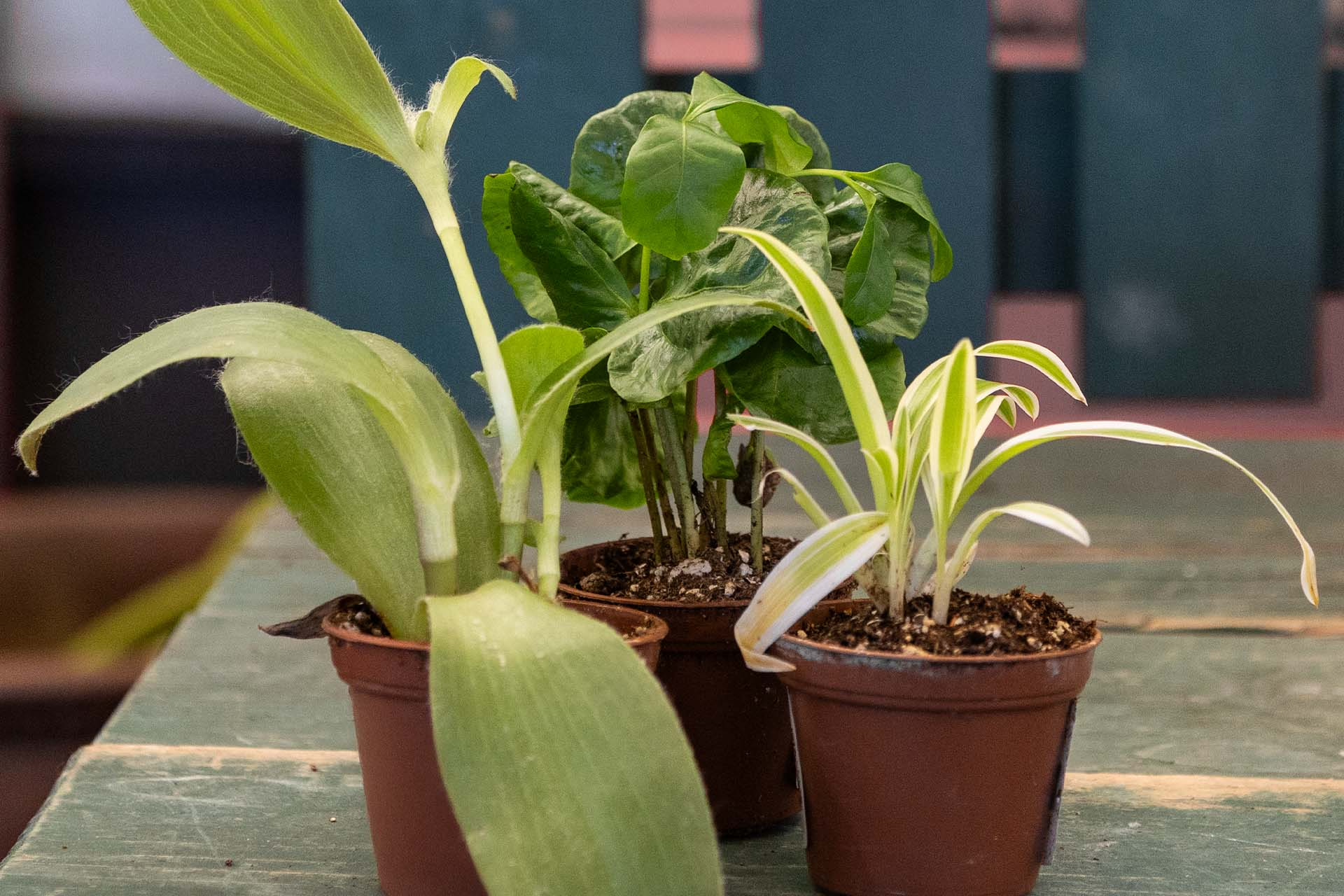
There are two key things to remember when choosing plants for a terrarium. The first is that all your plants should have similar watering and care requirements. Mixing a succulent that requires minimal water and lots of direct sunlight with a miniature African Violet that requires lots of water and only wants indirect light is a recipe for one of them to wilt.
The second is that variety is your friend. Mixing different colors and leaf shapes will add texture and add visual interest to your terrarium. You can even use plants to mimic grass or create scenes!
The Top
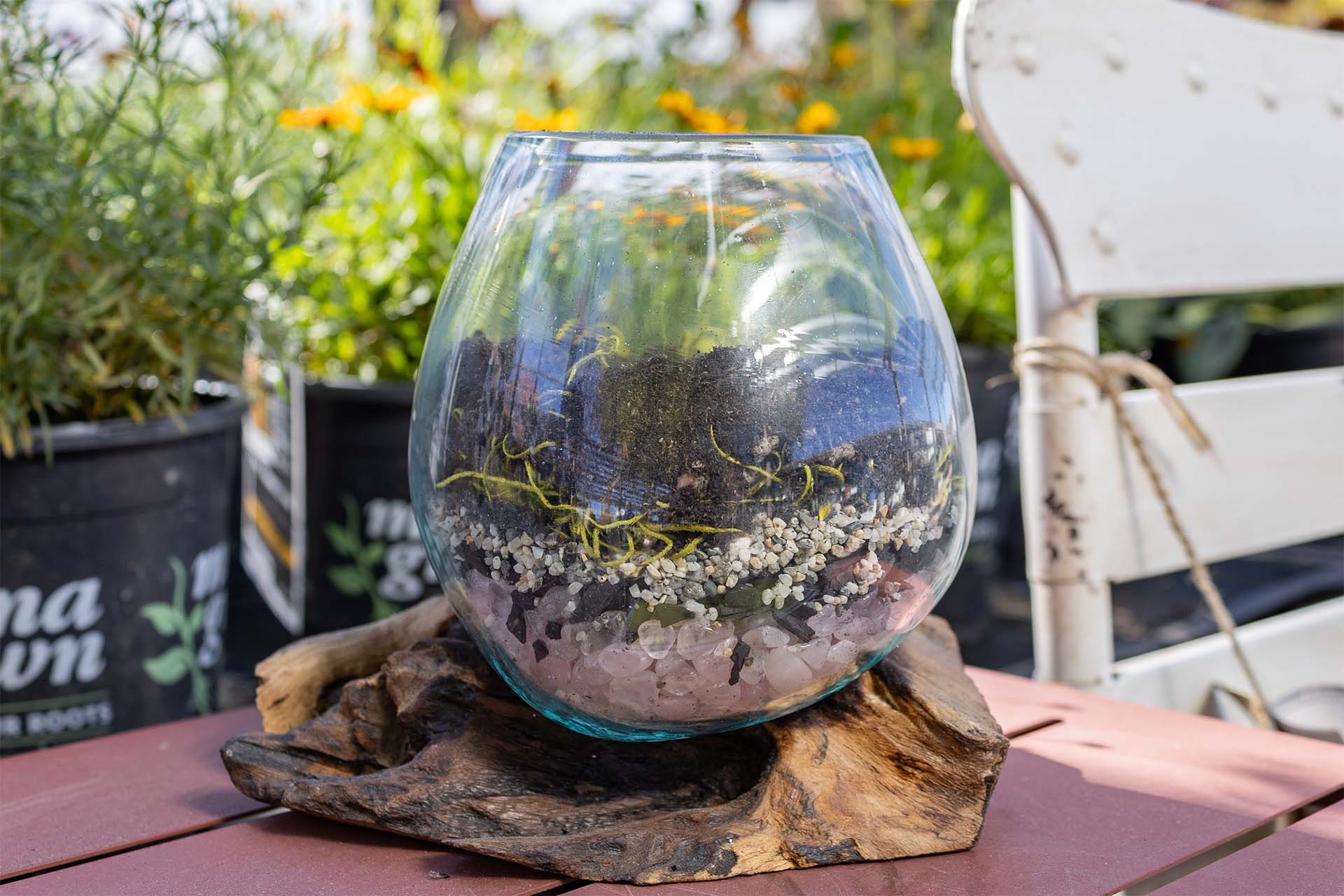
Every plant needs soil to grow in. For a terrarium, we recommend E.B. Stone Indoor Potting Mix. Keep in mind the needs of the plants you wish to add to the terrarium: if you are choosing plants that require drying out in between watering, make sure your soil is well draining or vice versa. The soil should take up more space in the container than any of the other components you’ve added thus far and should be more than deep enough to bury the plants’ roots.
Once you’ve added enough soil, you can add your plants. Carefully remove them from their current home and gently loosen the root ball, otherwise the plant can strangle itself. Dig a small hole in the soil and place it wherever looks good to you. You can even adjust them later if you don’t like the final product.
A helpful tip: if you are struggling to get the plants where you want them, you can use tools like tongs or even chopsticks to place them. This can also be particularly helpful for burying the roots into the soil.
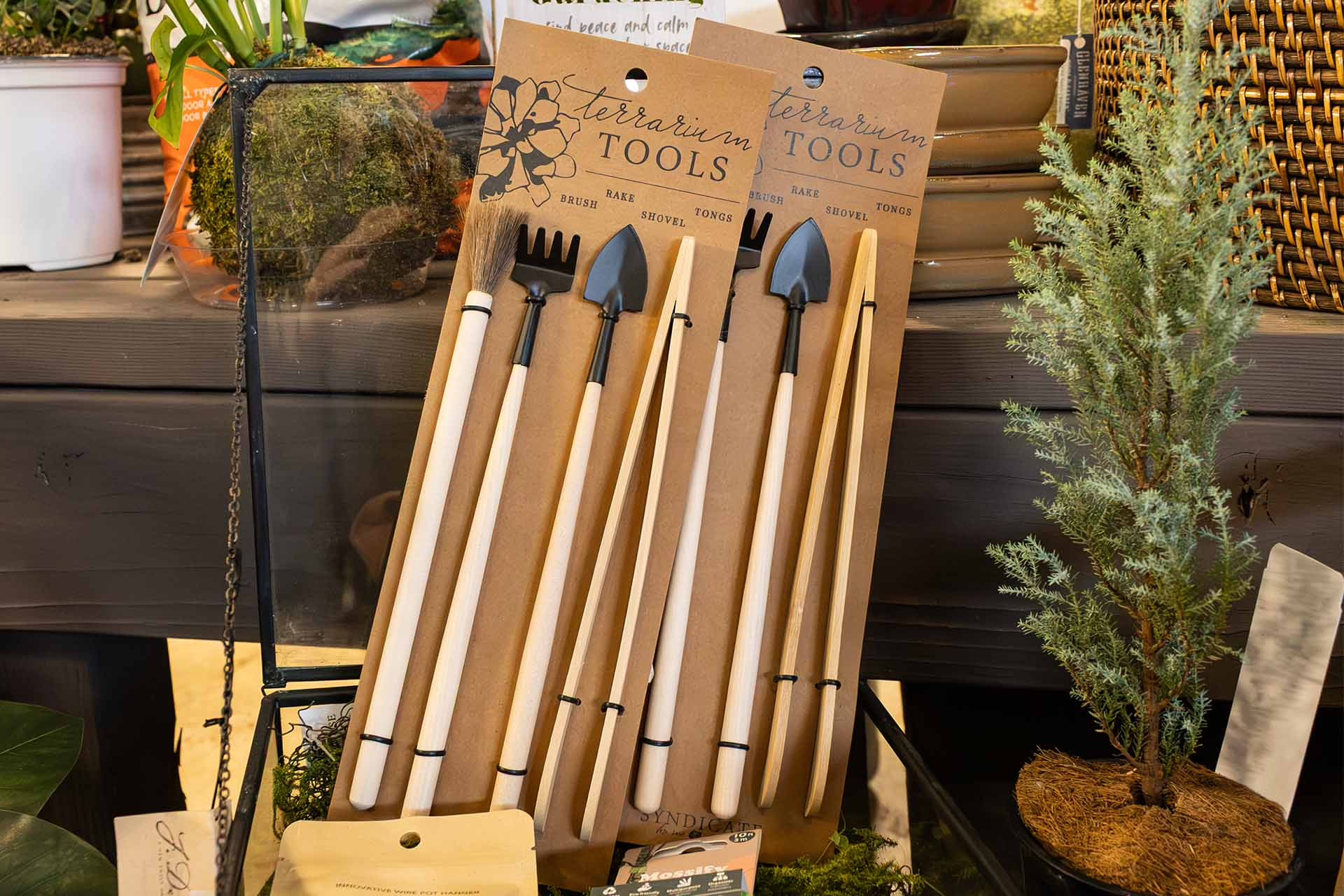
You can, and should, add soil as needed while you are adding your plants to the terrarium, or at the end, to ensure that the rootball of every plant is covered completely. Do this in small scoops and try to keep the soil off of any plants and leaves within the terrarium. Terrarium tool sets often come with a soft brush to clean off the rim of your container as well as any plants that might have soil on them.
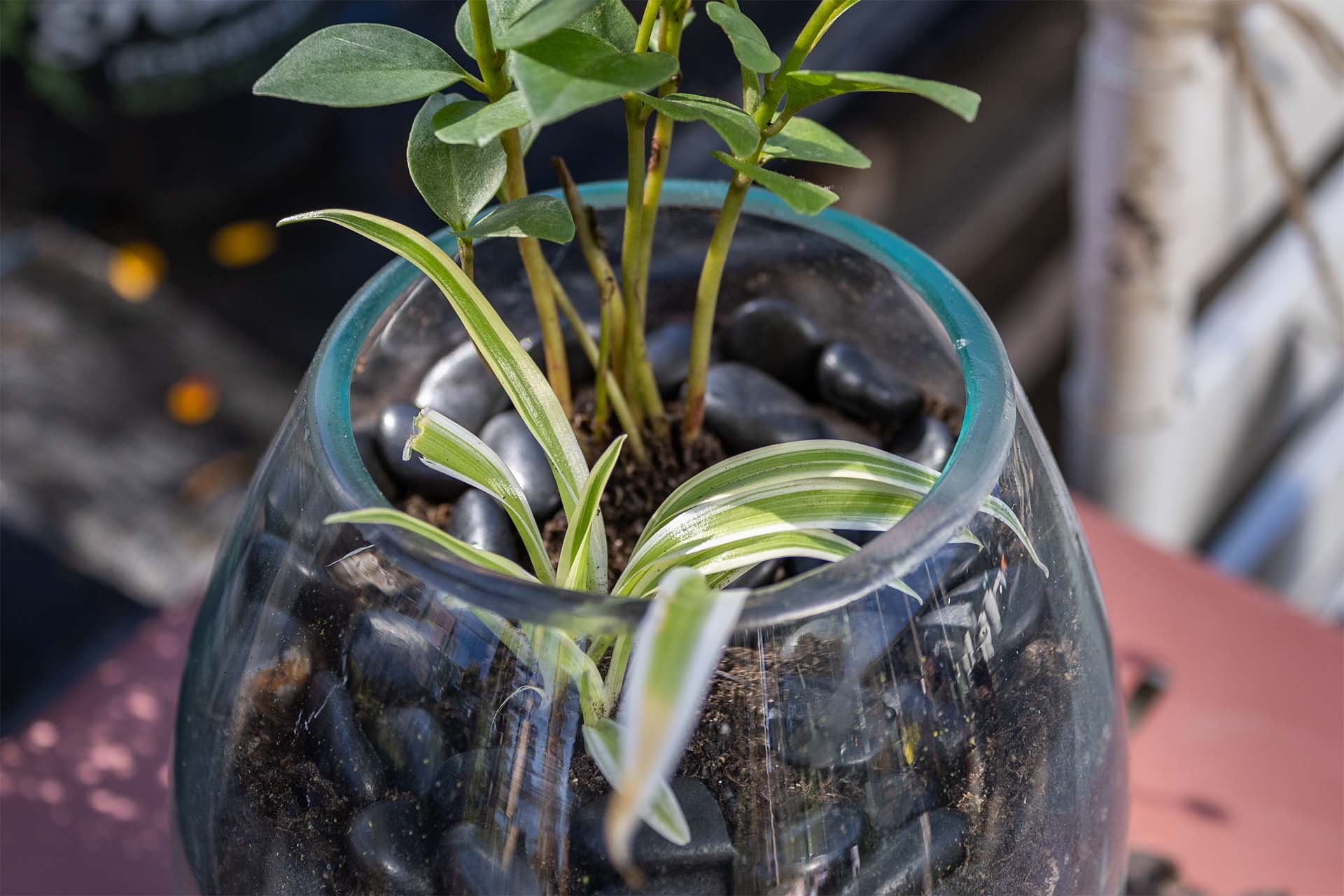
Decorative
Keep in mind the size of your terrarium and be careful not to add too many plants. If there is open space you find unsightly, decorative rocks or moss are both great options to add texture and interest. You can even add small figurines, like a bench, mailbox, or bridge, to create a scene within your terrarium.
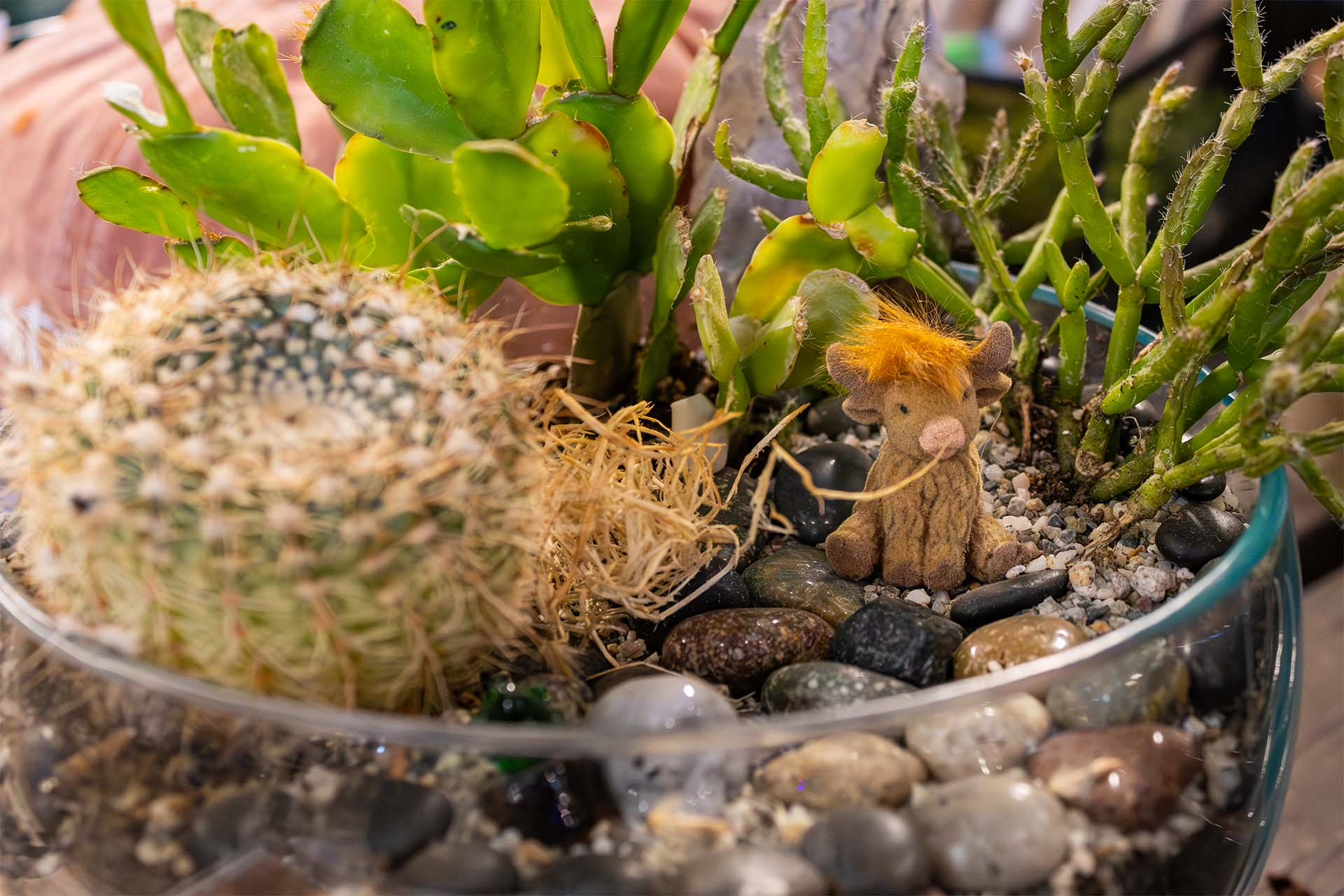
As with any re-planting, you should water your terrarium in after building it. If your soil was already quite moist this may not be necessary right away, but it will depend on the needs of the plants you have selected. And with that, you have a finished open top terrarium!
Share
Have you ever wanted to add a beautiful dark houseplant to your collection? Here is a quick guide of some of the stunning options to bring a little goth spirit into your home.
You have to be very careful when repotting a cactus but if your spiky friend is in need of a bigger home, here are some tips and tricks to help you do it safely.
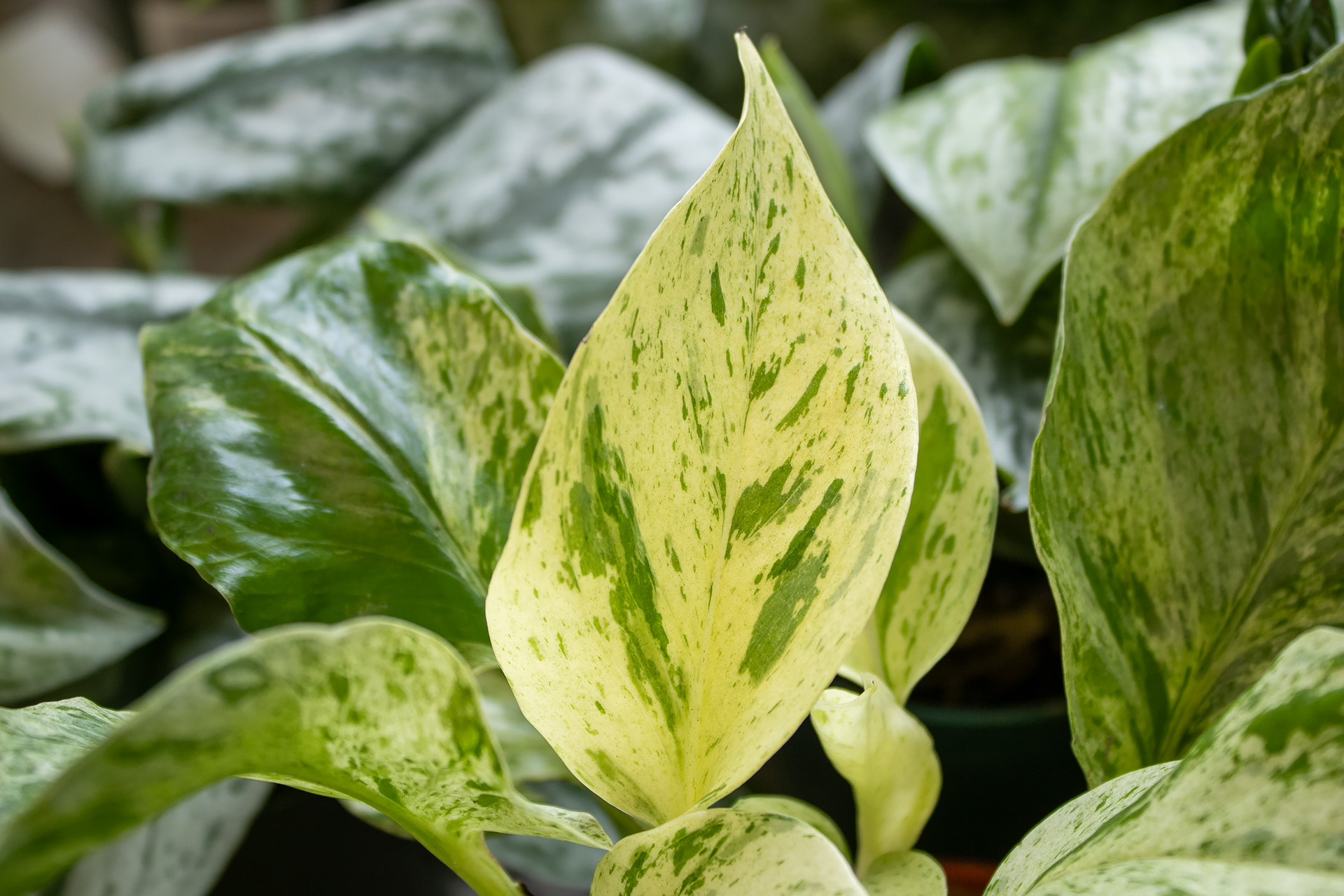
Walk through any houseplant collection and chances are your eyes will be drawn to the plants splashed with creamy whites, soft yellows, silvery streaks, pink blushes, or marbled patterns. These striking markings are known as variegation, and they transform ordinary leaves into living works of art.
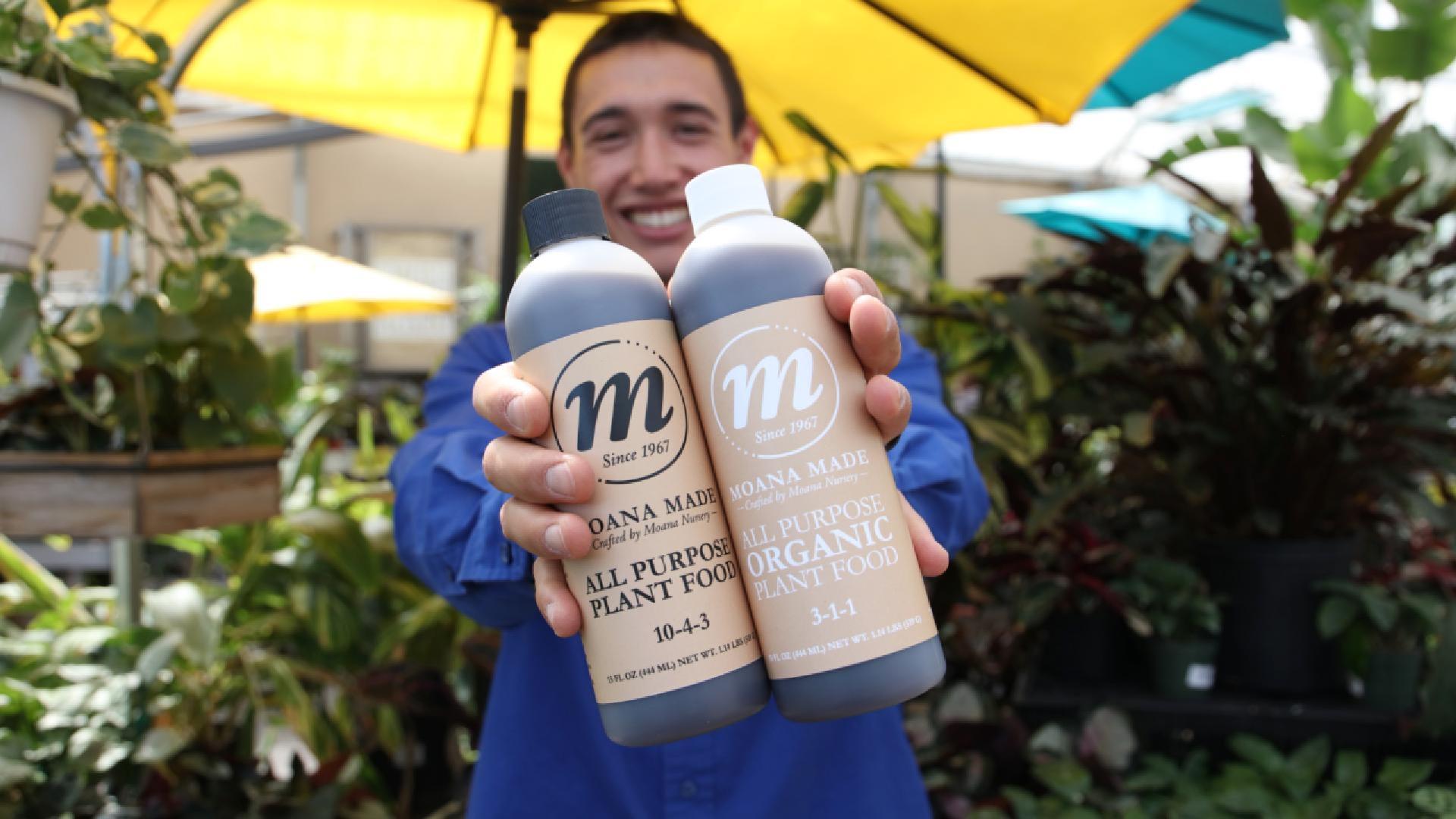
Shelves are packed with endless options, different ratios, formulas, and promises. But more choice doesn’t always mean better results. At Moana Nursery, we believe growing healthy plants should be simple, effective, and trusted.