
Share
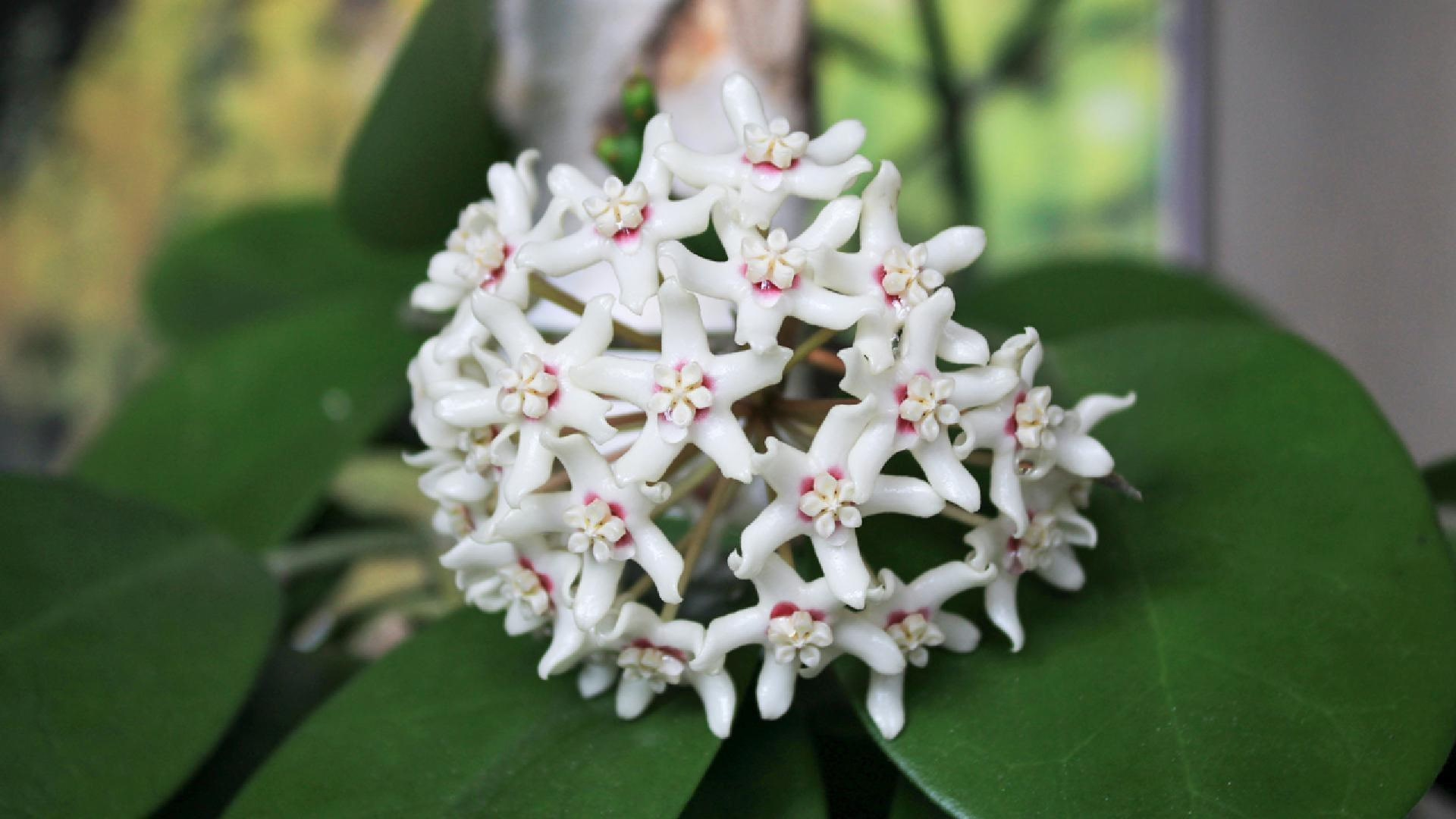
A home’s greenery can bring the pleasure of gardening indoors through every season. Plants soften a bright window, add texture to a favorite room, and give us something to tend when outdoor gardens slow down for winter.
Hoyas offer that kind of lasting interest. Their climbing or trailing stems carry leaves in a range of shapes, patterns, and colors. With time and suitable conditions, many also produce clusters of waxy flowers, sometimes with a noticeable fragrance.
For indoor gardeners in the high desert of northern Nevada, the main considerations are strong window light, dry air, and a potting mix that supports healthy roots. Paying attention to those conditions helps a new hoya settle into your home.
Understanding How Hoyas Grow
Many hoyas naturally grow on trees, with roots tucked into bark crevices where air circulates freely. Their roots receive moisture but are not surrounded by heavy, constantly wet soil.
That growth habit helps explain their indoor care. An airy potting mix, good drainage, and a chance to dry somewhat between waterings support healthy growth. Although many hoyas have thick leaves that store moisture, repeated, prolonged drought periods can still stress them.
Some hoyas climb readily onto a support, while others make attractive trailing plants. Depending on the hoya variety you select, choose a trellis, shelf, or hanging basket that allows room for the stems to develop.
Finding the Right Light
Bright light supports healthy foliage and future flowering. An east-facing window is a useful starting point, offering morning sun with protection from stronger afternoon exposure.
Near a south- or west-facing window, a sheer curtain can help soften direct sunlight. Watch the light reaching the leaves throughout the day, especially where glass becomes hot in the afternoon.
If you want to, you can introduce stronger light gradually. Bleached areas on your hoya leaves or dry, scorched patches can indicate too much light exposure. A dim corner can limit growth and flowering, so supplemental lighting may help when natural light is insufficient.
For hanging baskets, make sure light reaches the top of the plant as well as the trailing stems. A basket placed too high above a window may receive less light than it appears to from below.
Watering in a Dry Climate
Watering needs change with the potting mix, container, room temperature, and amount of light. A small basket in a warm room may dry much faster than a larger pot in a cooler location.
Use a regular reminder to check your plant rather than automatically adding water. Feel below the surface, use a water meter, or your finger, and lift the pot to learn how its weight changes as the soil mix dries.
Allow the soil mix to dry somewhat between waterings, without leaving the roots parched for long periods. The surface alone can be misleading if the center of the pot is still wet. Different hoyas may need different intervals, even when they sit beside one another.
When watering is needed, water thoroughly until excess water drains from the bottom. Let the pot drain before returning it to a decorative container, and/or empty any water collected in the saucer/drip tray.
Yellowing or limp leaves call for a closer look before more water is added. Both overly wet roots and prolonged dryness can cause stress to your hoya. If you notice visible stress, check the condition of your soil mix and roots to help determine what the plant needs. If you’re ever unsure, ask any of the experts at Moana Nursery for tailored advice to your specific variety and setup.
Choosing a Pot and Potting Mix
A container with drainage holes is essential. Use a loose potting mix with enough moisture retention to supply the roots with enough air space to prevent them from getting/staying soggy.
A standard potting mix amended with orchid bark and perlite is a great starting point. Keep a close eye on your hoys in it’s new home at fist and pay attention to how it behaves. A very coarse blend that dries quickly may need adjustment in an especially dry room.
Repot when roots need more room or the mix has broken down. Choose a container modestly larger than the root ball. An oversized pot can hold moisture longer than the roots can use it.
Helping Hoyas Through Dry Indoor Air
Heating and air conditioning can change the conditions around a plant. Keep hoyas away from vents, cold drafts, and direct contact with cold window glass.
In an especially dry room, a humidifier or even a tray of pebbles and water can provide more consistent humidity than occasional misting. A small humidity gauge helps you understand conditions near the plant.
Extra water in the pot does not replace moisture in the air. Always check your soil mix before watering, even when the room feels dry. During periods of lower light and slower growth, a hoya may need less frequent watering.
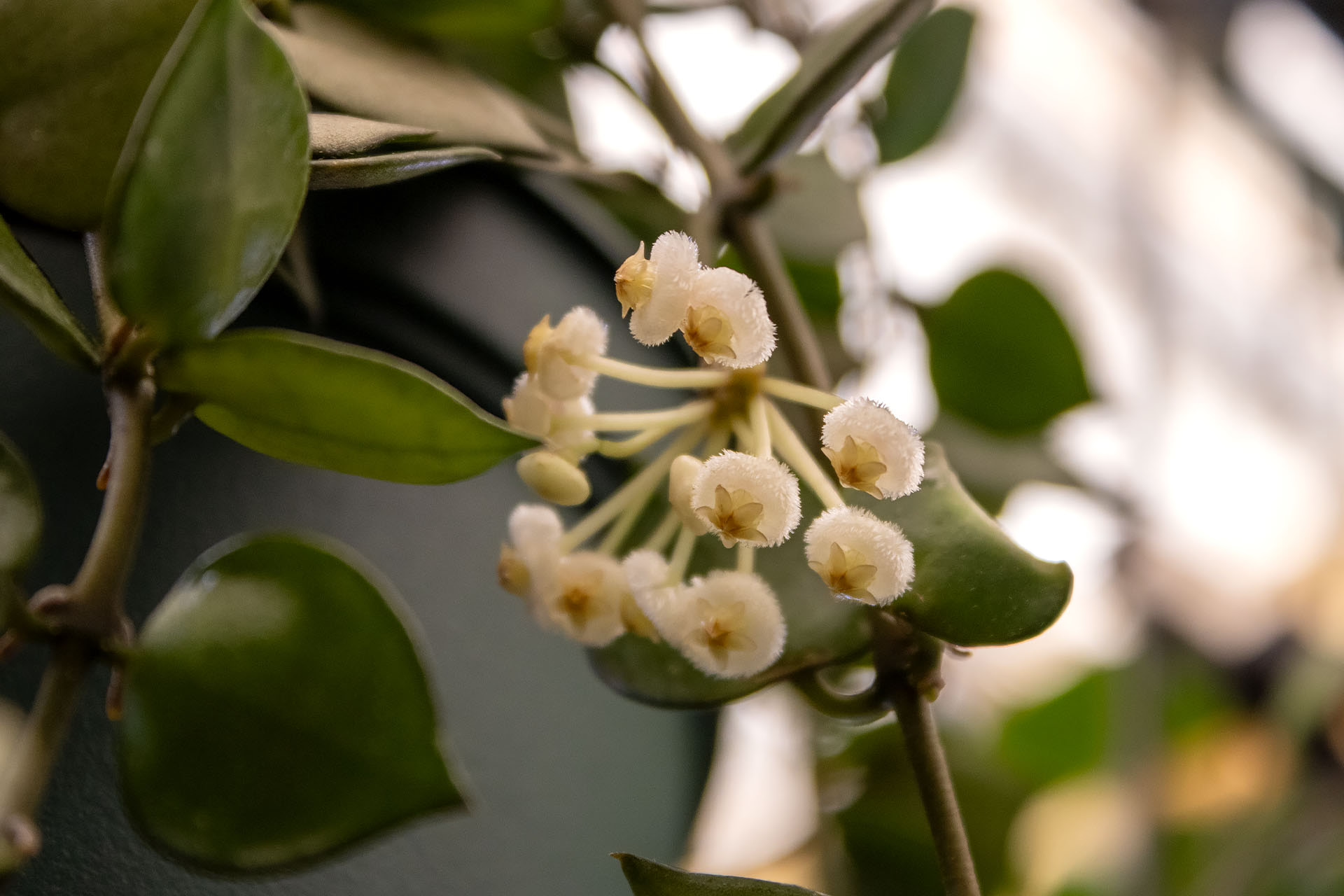
Choosing a Hoya for Your Home
The varieties available offer several ways to enjoy hoyas, whether you prefer patterned foliage, colorful leaves, or a full trailing basket.
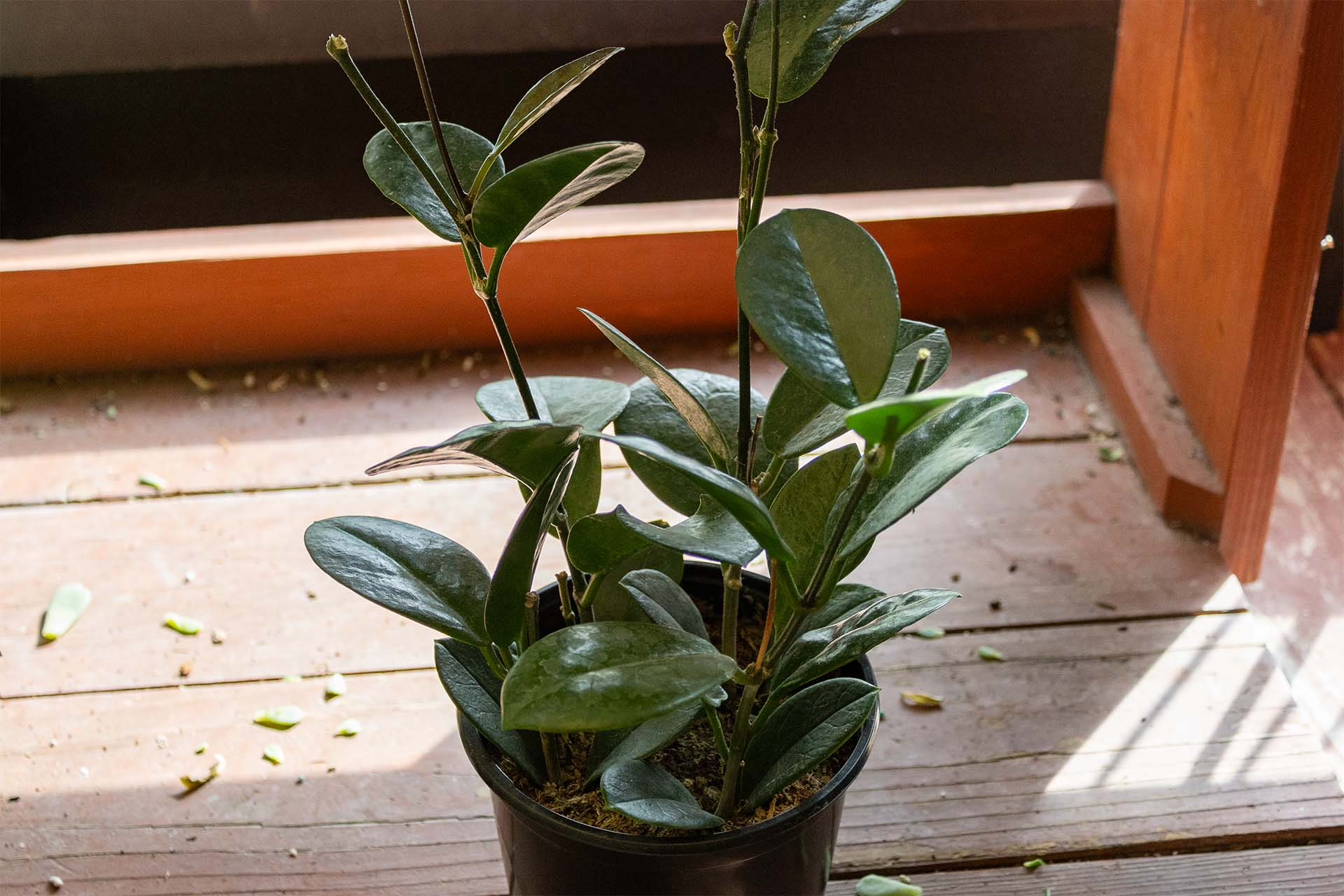
Hoya australis
Hoya australis is a climbing choice that can be guided onto a trellis or other support. Give its vines room to extend and a bright location where the plant can develop over time.
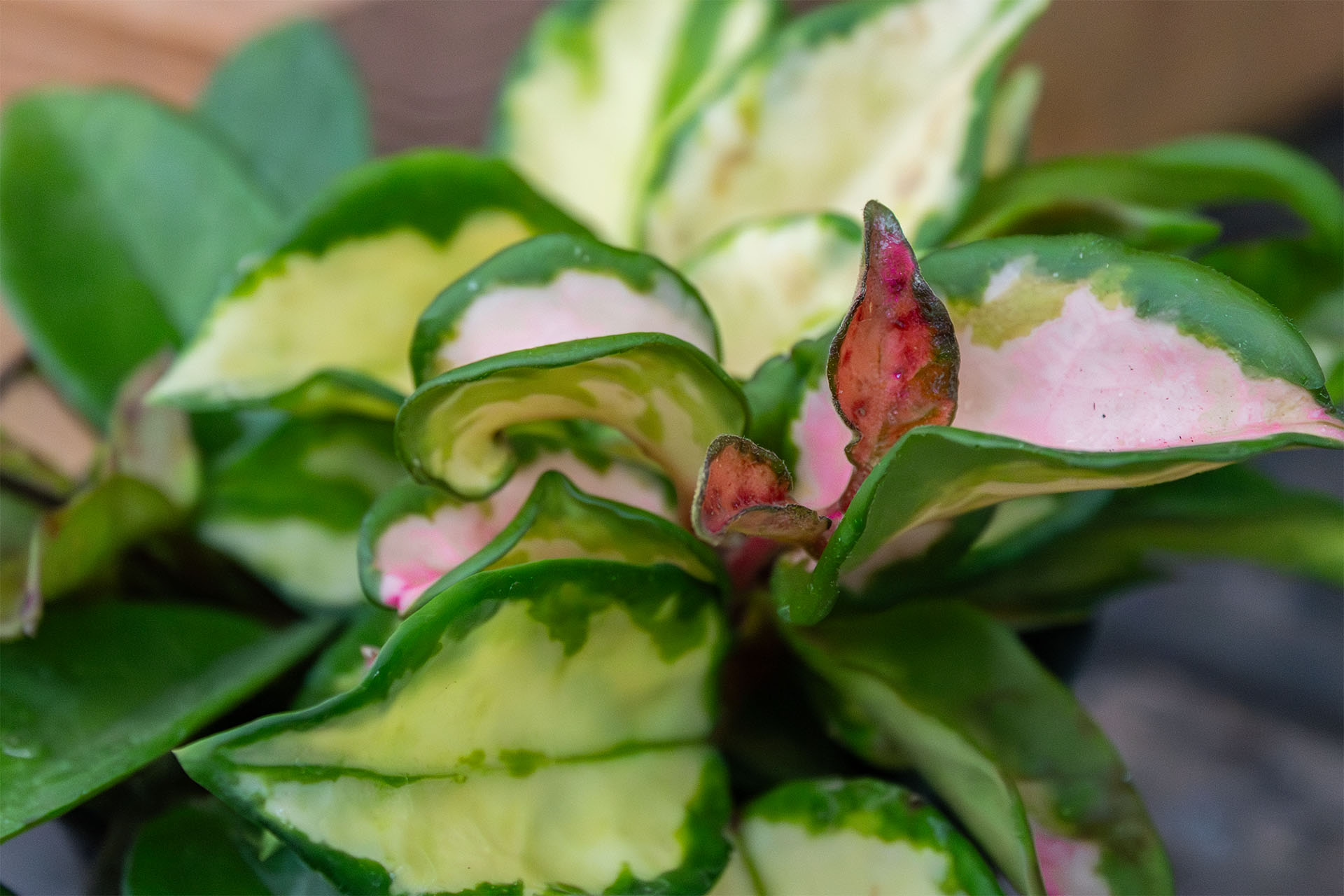
Hoya australis Lisa
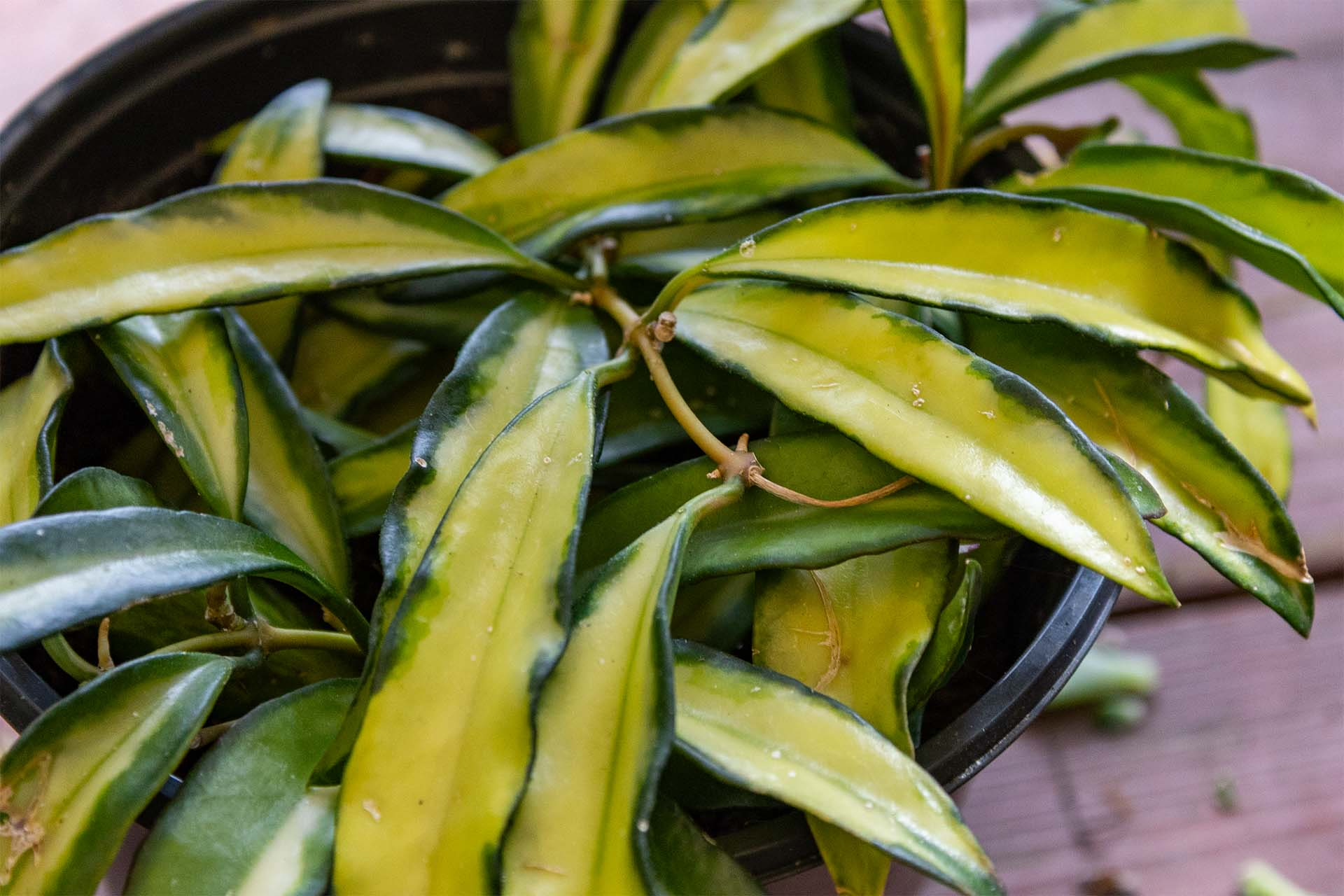
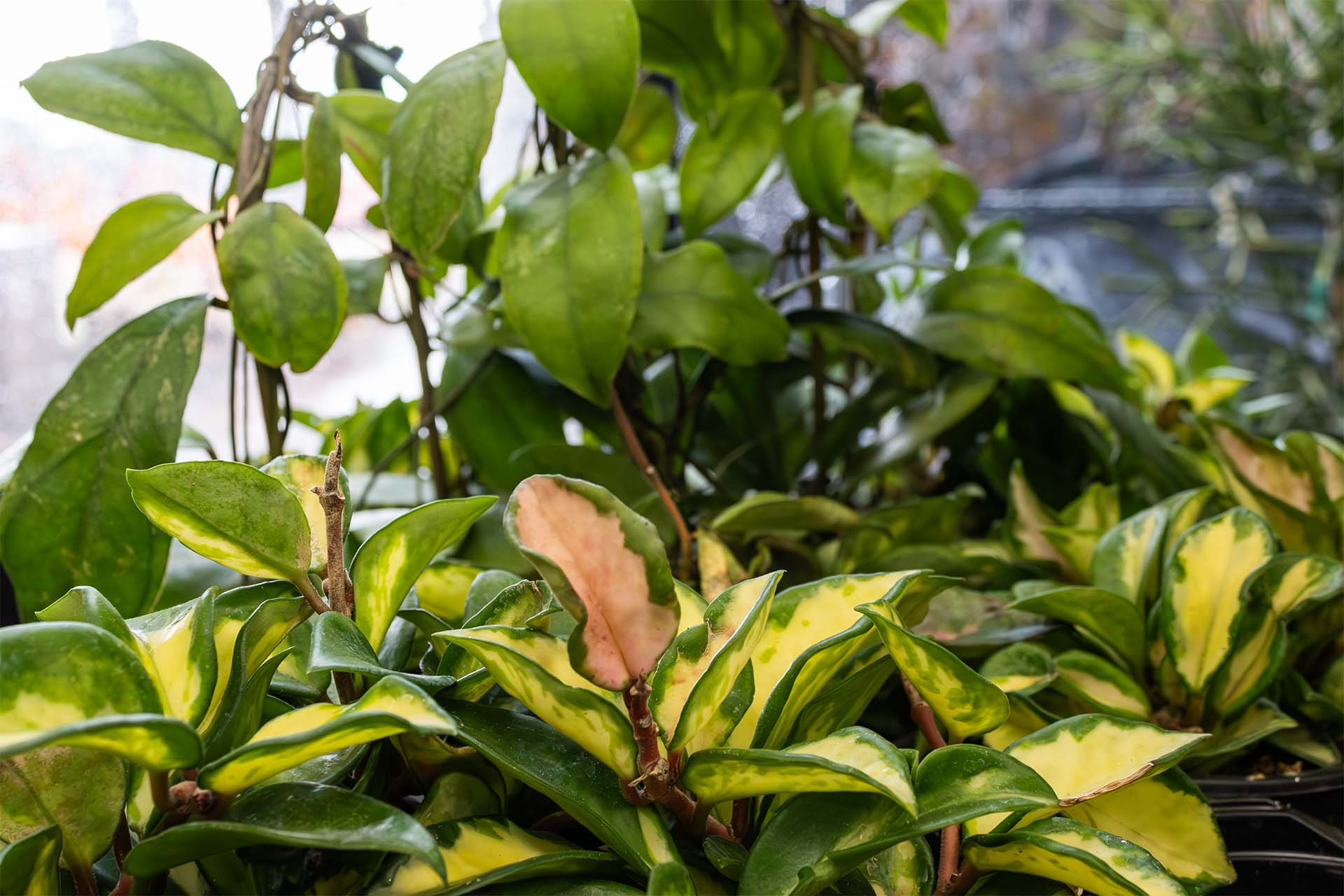
Hoya australis ‘Lisa’ adds variegated leaves in shades of green and creamy yellow, sometimes with reddish tones. Its foliage brings color to an indoor collection even before flowers appear. Provide bright light with protection from intense afternoon sun.
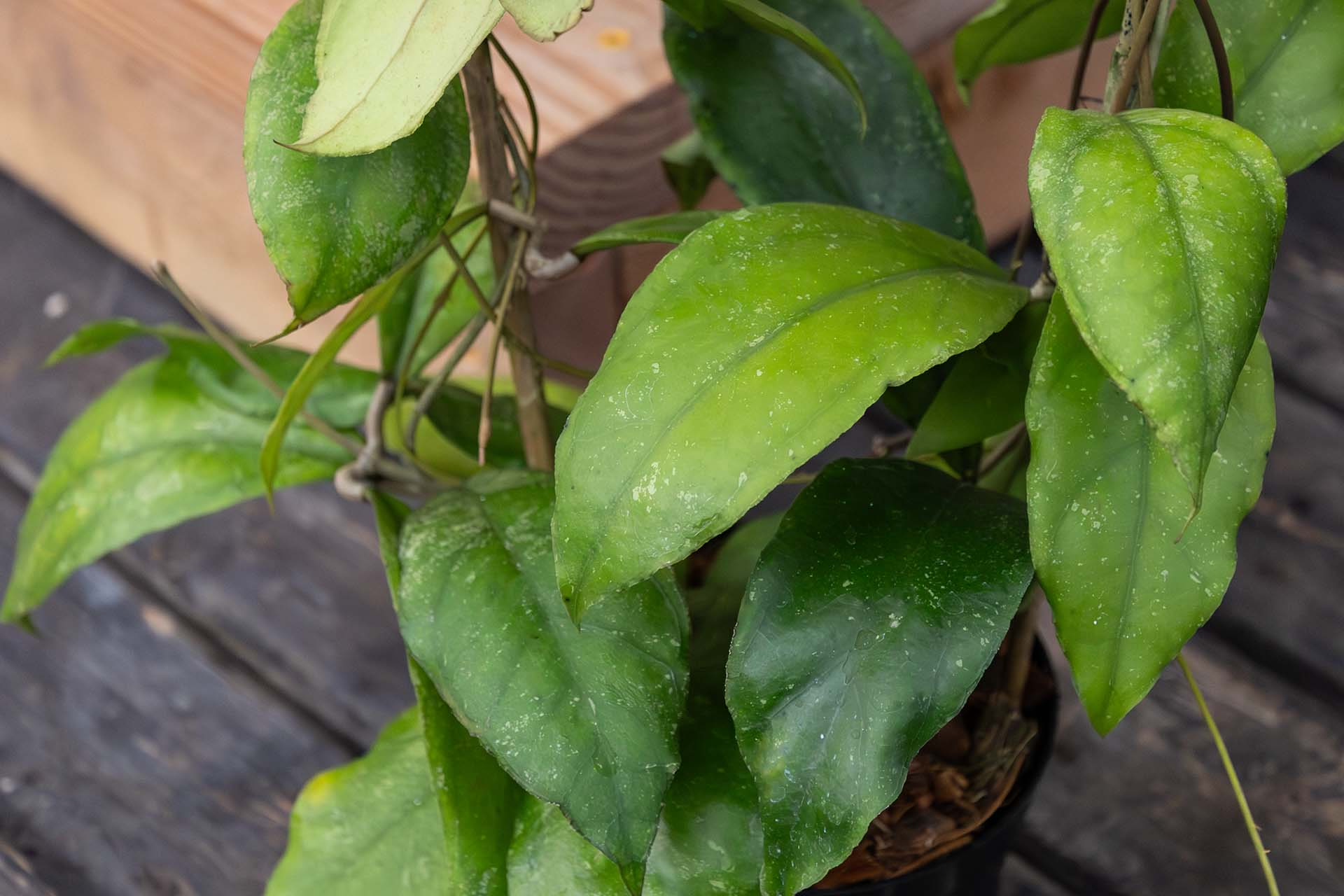
Hoya finlaysonii
Hoya finlaysonii stands out for its prominent dark veining and patterned leaves. Individual forms vary in leaf shape and markings, making it an appealing choice for gardeners who enjoy foliage as much as flowers.
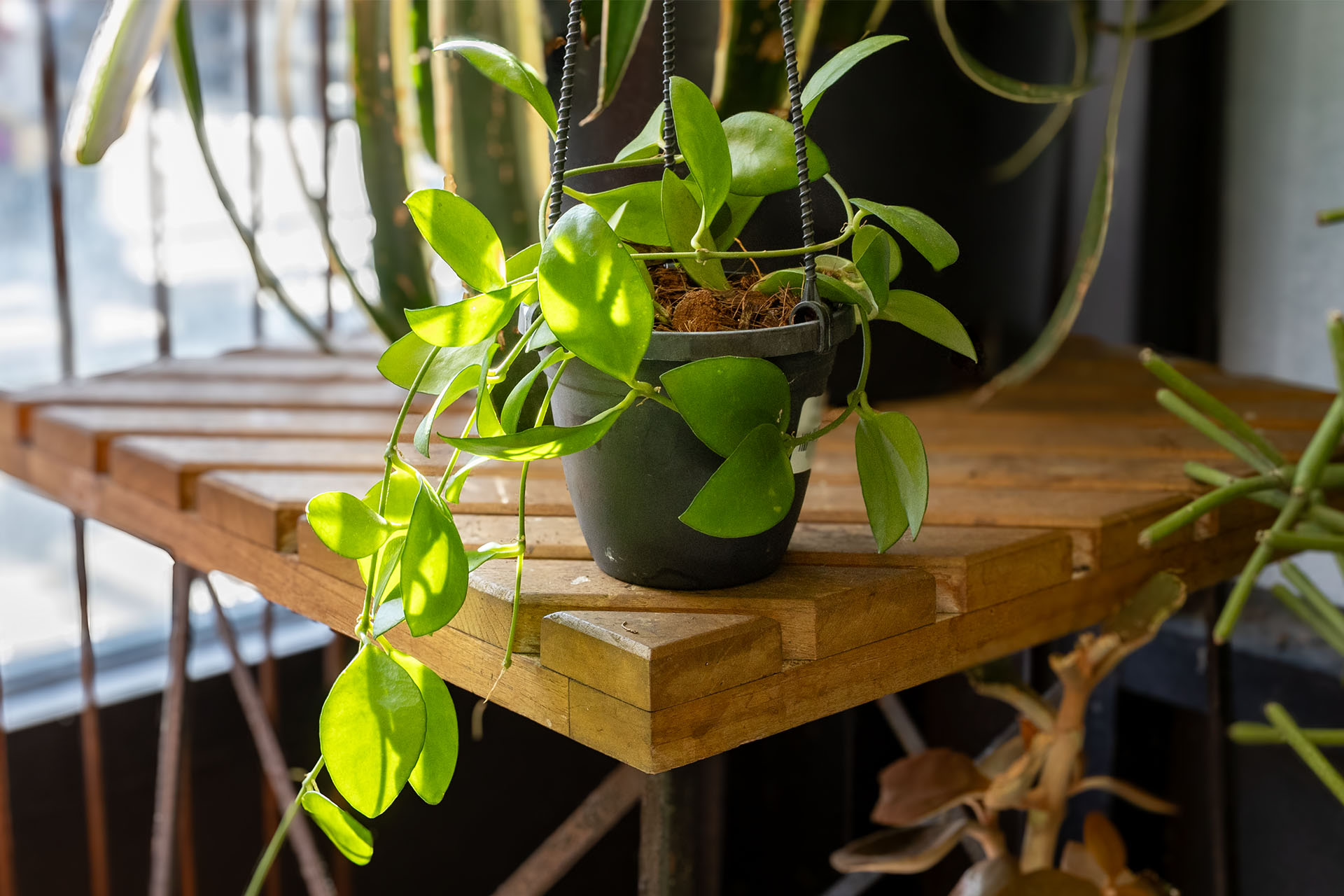
Hoya myrmecopa
Hoya myrmecopa offers thick green leaves and a relatively compact habit. Its small flowers add another point of interest when the plant is ready to bloom. Growth and flowering will depend on its maturity and growing conditions.
Hoya Baskets and Other Varieties
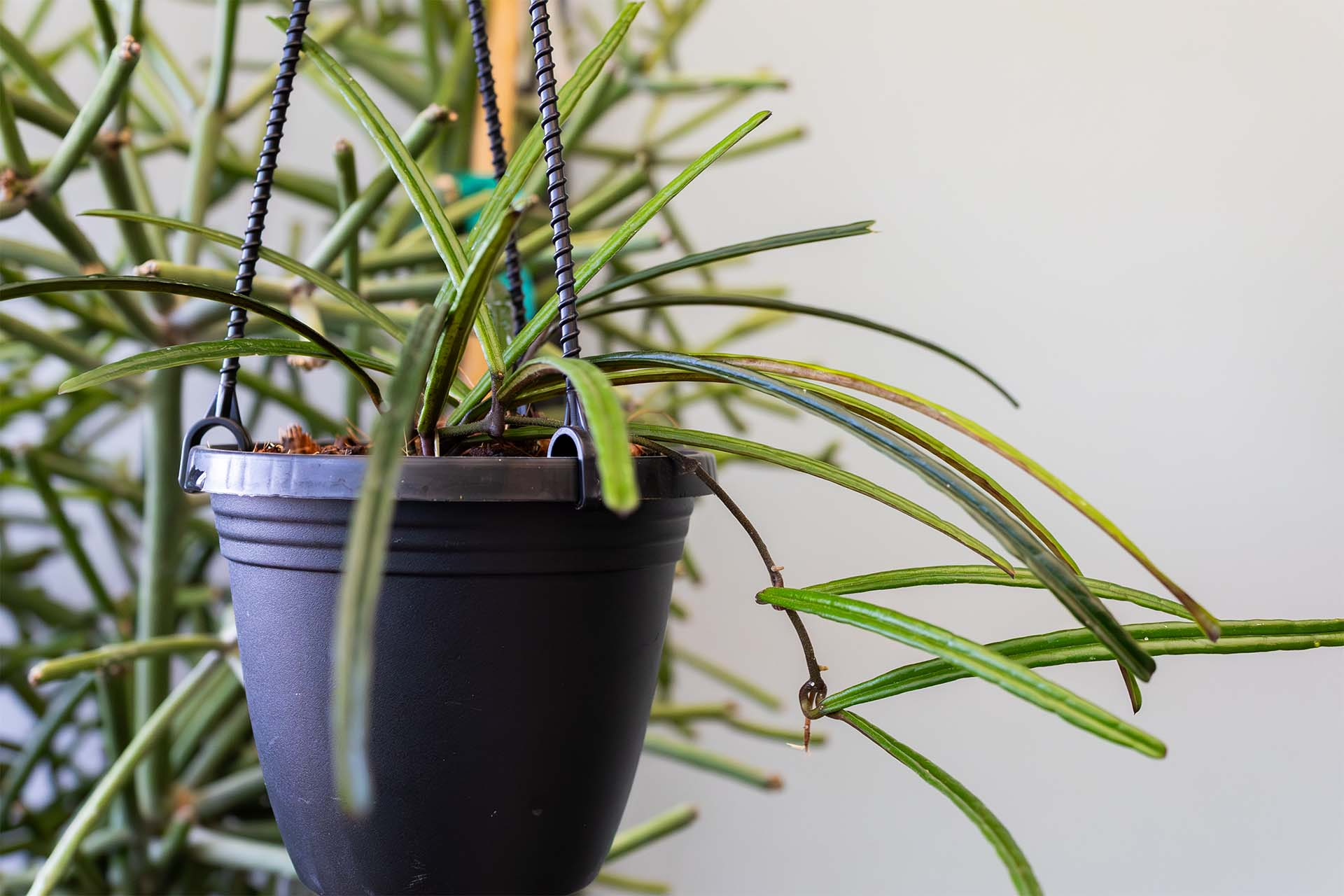
Assorted hoya baskets bring trailing growth to a bright shelf or hanging display. Check each basket individually, since pot size, root development, and the mix inside can affect how quickly they may dry out.
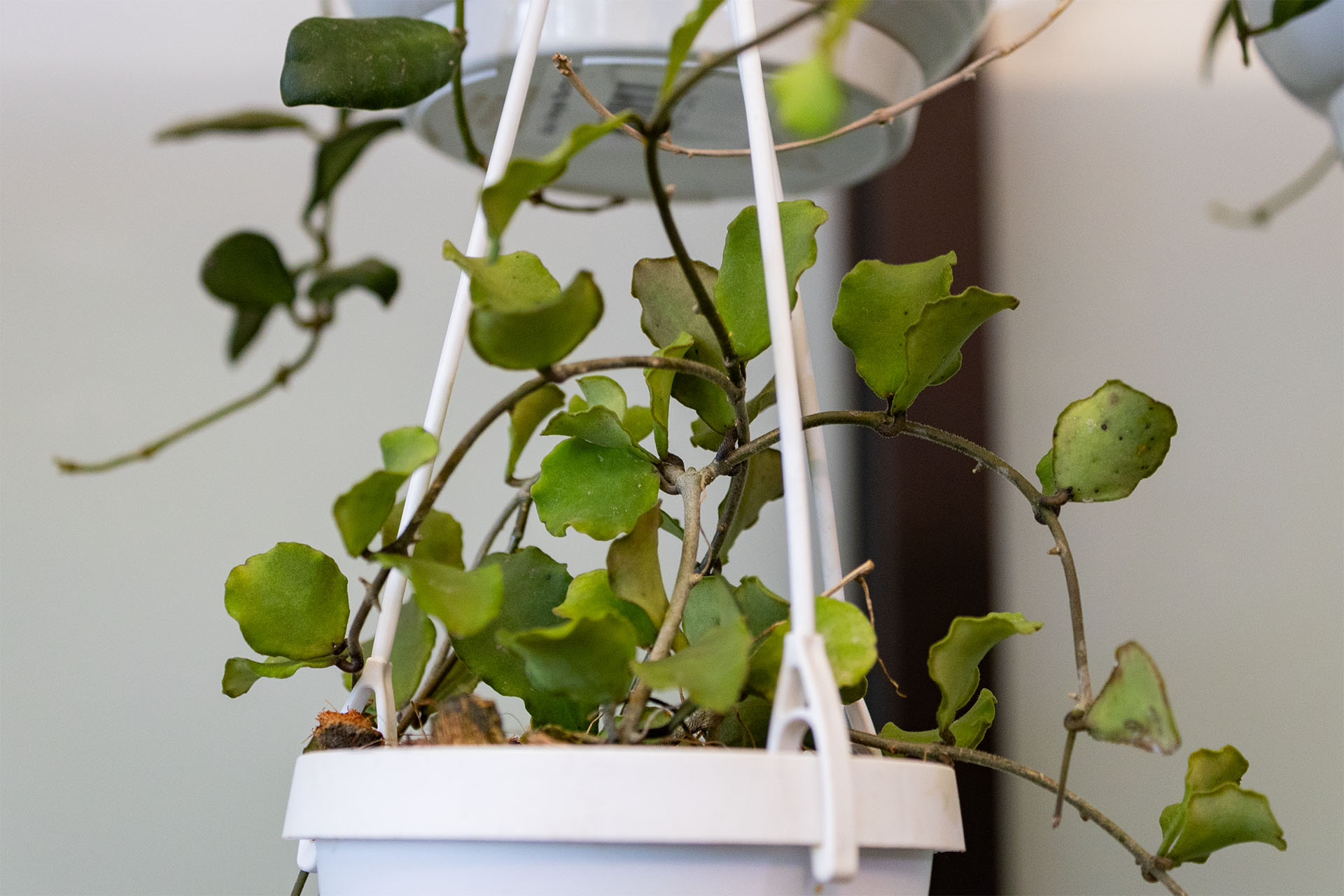
Other popular hoya varieties includes Hoya kerrii, Hoya insularis, Hoya kanyakumariana, Hoya burtoniae, variegated burtoniae, and splash hoyas.
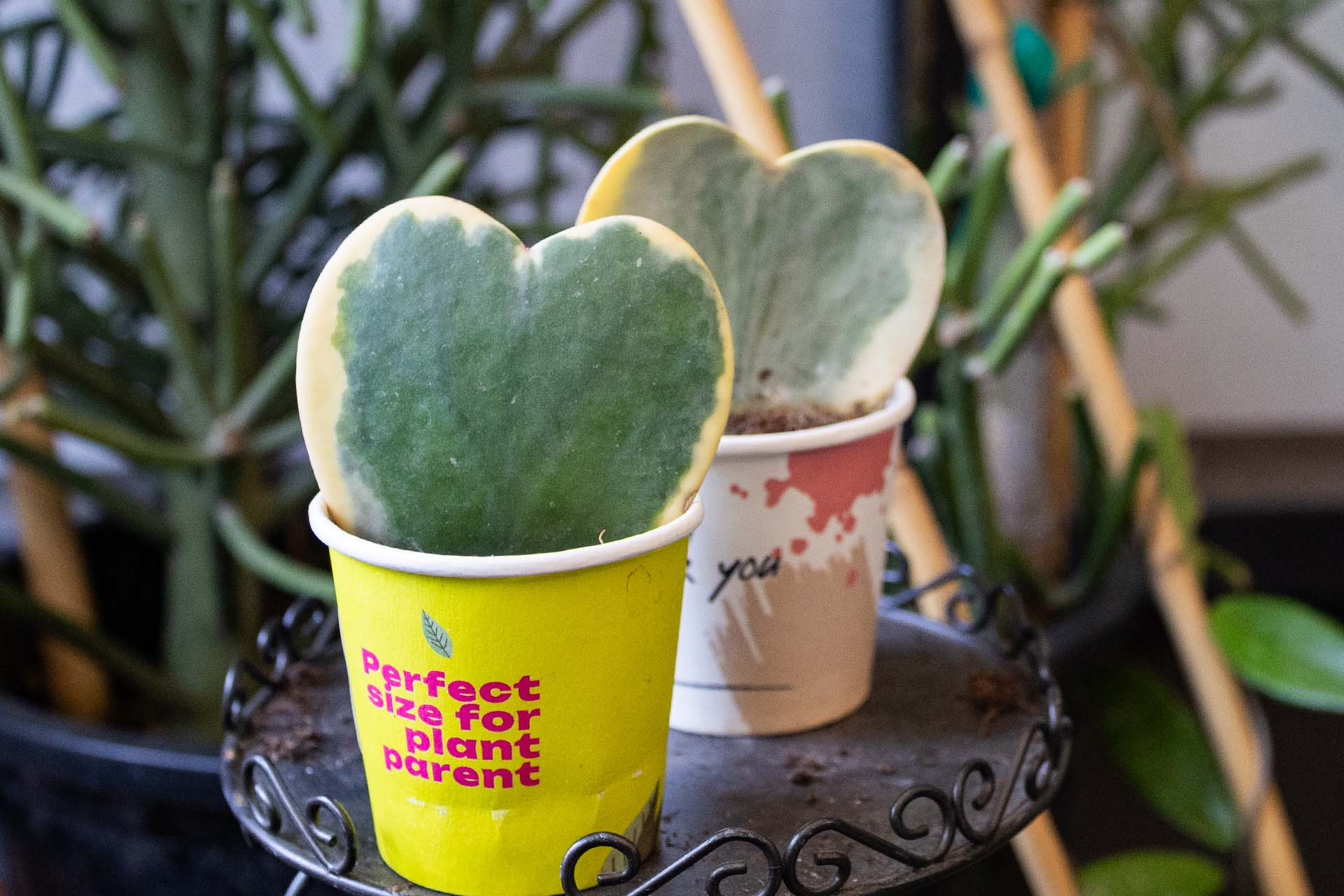
Hoya kerrii is known for its heart-shaped leaves. If you want a plant that will develop vines, ask about the difference between an established plant and a single rooted leaf. A leaf without suitable stem tissue may remain a single ‘zombie’ leaf.
Supporting Growth and Future Flowers
Feed modestly while the plant is actively growing. Reduce or pause feeding when growth slows. Adequate light remains essential for growth and flowering.
Hoyas may send out long, bare stems before leaves develop. Give these searching vines time, and gently guide climbing growth onto a support as needed.
After flowers fade, leave the short flower-bearing spurs, called peduncles, attached. Many hoyas flower from those same structures again.
Check leaf joints and undersides regularly for mealybugs and mites. If you notice persistent yellowing, damaged new growth, or signs of insects, treat with an insecticidal soap or bring photos to any Moana Nursery and ask a Plant Doctor for help.
A Lasting Addition to Your Indoor Garden
Hoyas offer plenty to enjoy while they grow, from the veined leaves of Hoya finlaysonii to the variegated foliage of Hoya australis ‘Lisa’ and the trailing stems of a hanging basket.
Choose a bright location, provide an airy potting mix, and adjust watering to the conditions in your home. Those practical choices give your hoya a strong start and room to become part of your indoor garden for years to come. Happy Hoya-Days!
Share
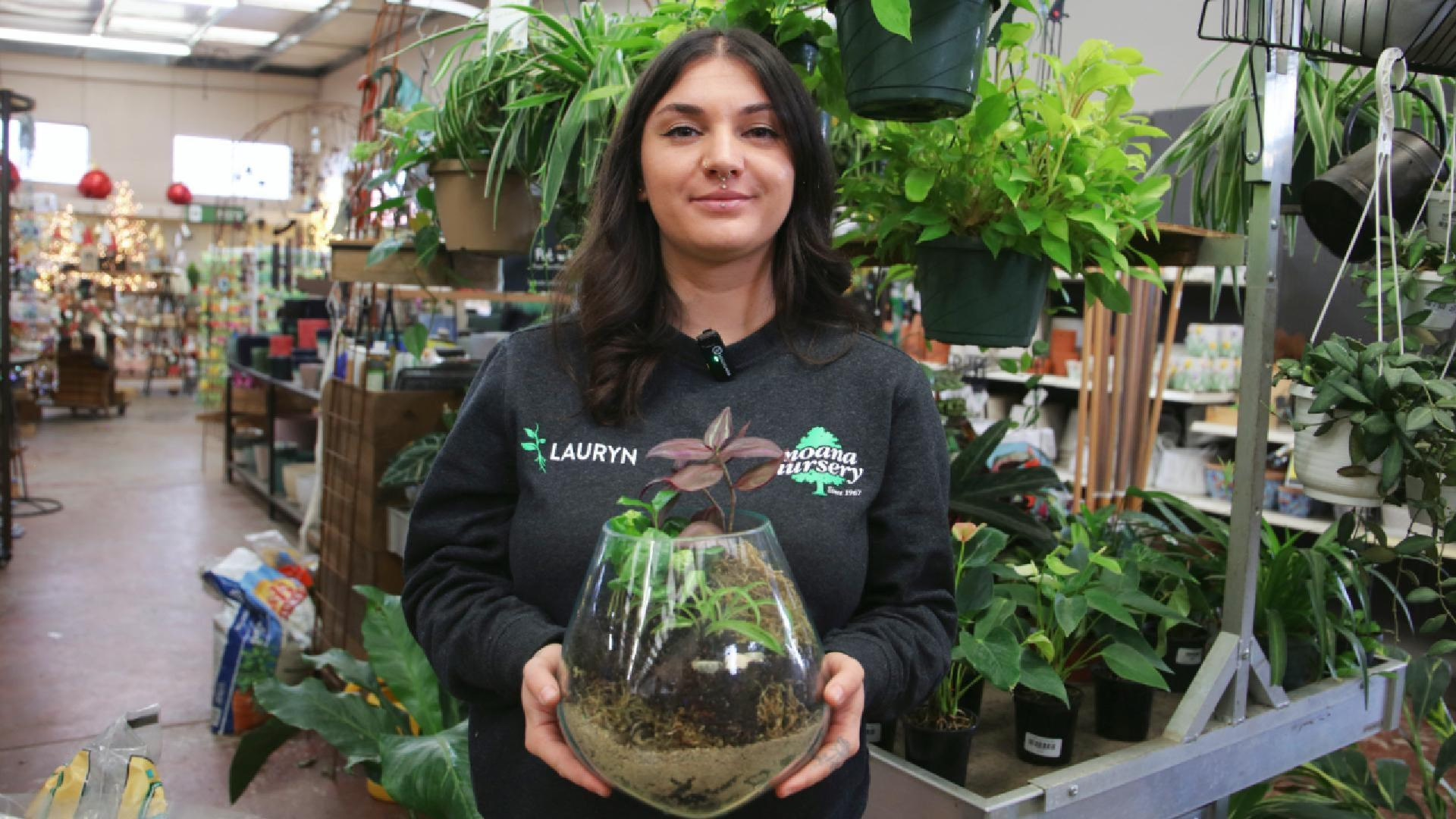
Terrariums are a unique way of displaying your houseplants! Not only do they offer visual interest and variety in a small space but they’re entirely customizable and fairly easy to build. Here's how!
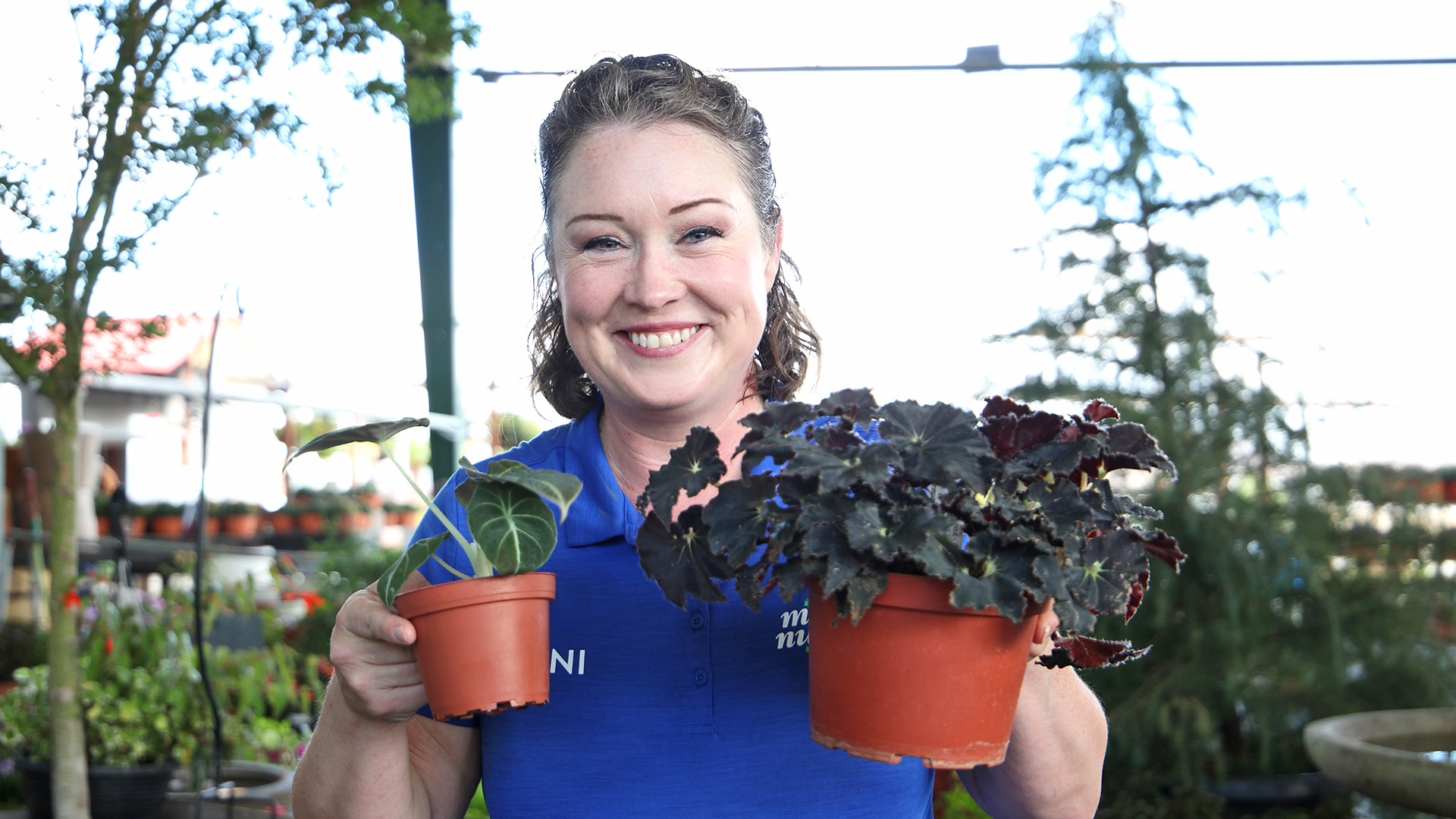
Have you ever wanted to add a beautiful dark houseplant to your collection? Here is a quick guide of some of the stunning options to bring a little goth spirit into your home.
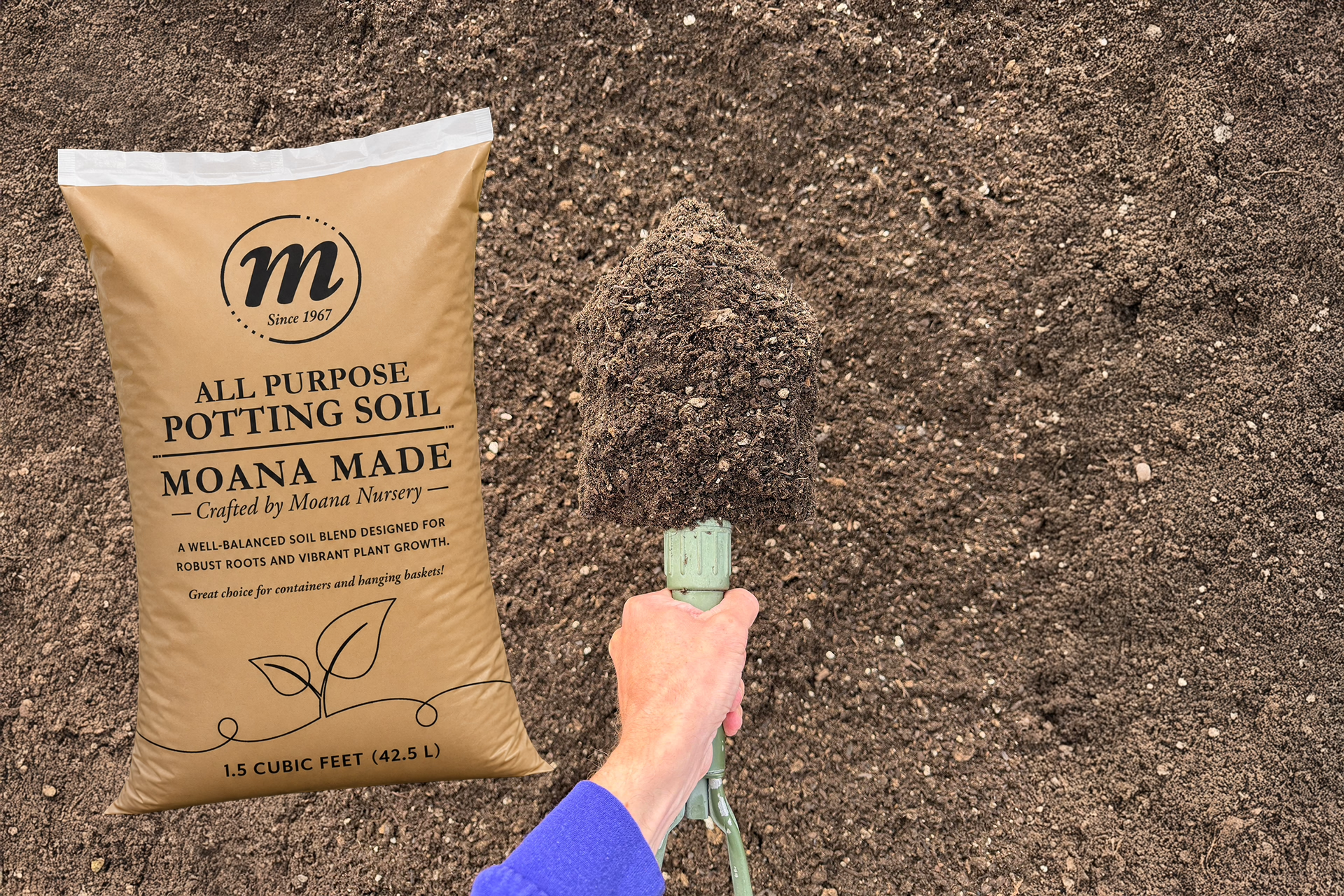
Moana Made All Purpose Potting Soil, a thoughtfully balanced growing blend crafted by Moana Nursery in partnership with Full Circle Compost. More than a product available at our garden centers, Moana Made is the same trusted blend we use at our local farm to grow Moana Grown plants.
You have to be very careful when repotting a cactus but if your spiky friend is in need of a bigger home, here are some tips and tricks to help you do it safely.